New Zealand
'Very unusual': Group of critically endangered giant turtles spotted in BOP

Published by Suzette Howe
26 Feb 2026
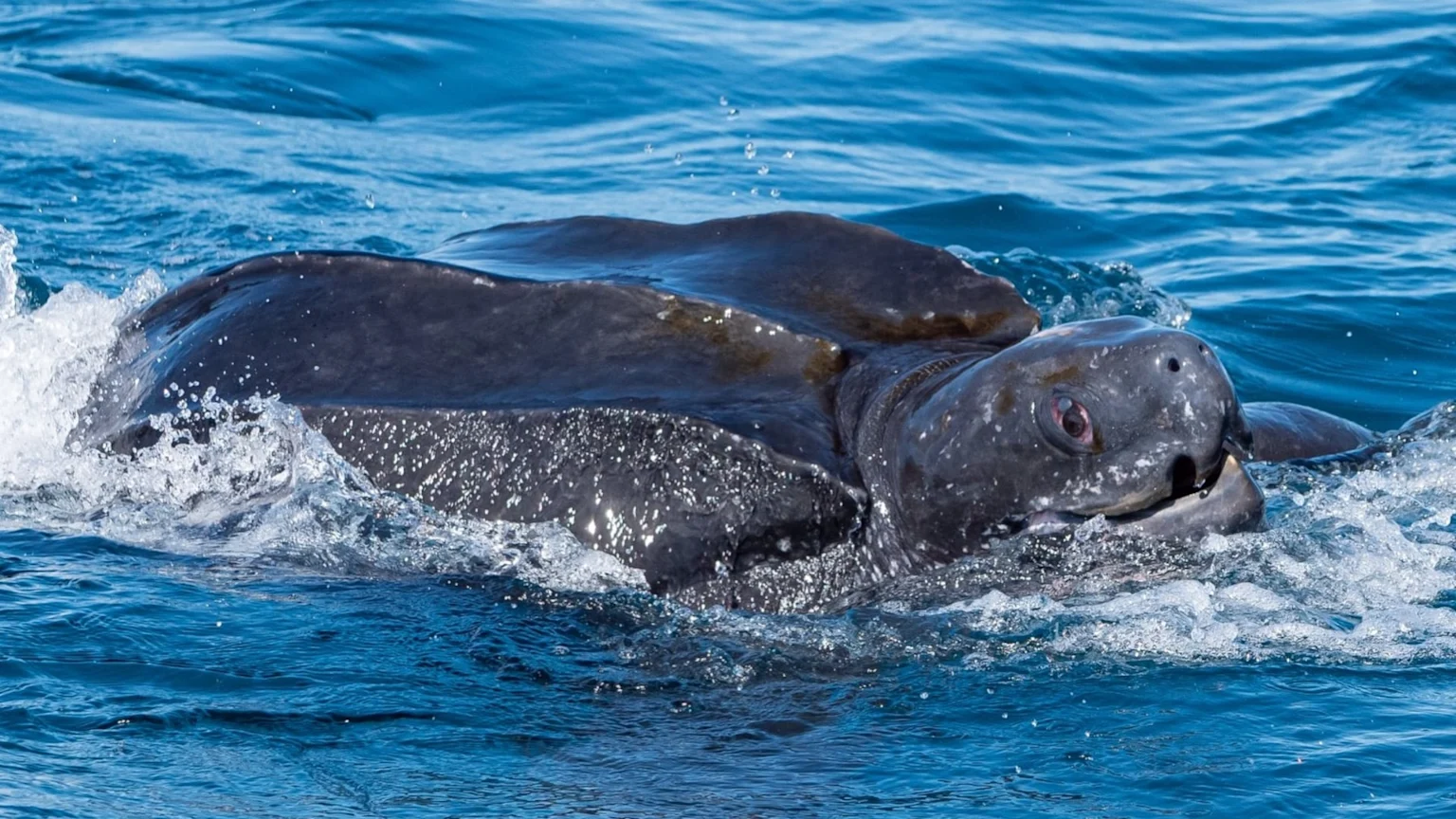
A rare sighting of a group of leatherback turtles in the Bay of Plenty has sparked excitement among marine experts, with the Department of Conservation (DOC) now hoping to fast-track new tracking research.
Up to five of the critically endangered turtles were seen feeding on jellyfish off the coast of Papamoa this week.
DOC senior marine scientist Karen Middlemiss told rova that while the turtles travel through New Zealand waters annually on their 10,000km to 12,000km journey from California to the Pacific Islands, seeing them in a group is a “very unusual” event.
“They are a solitary turtle species, so they don’t hang out in groups,” Middlemiss explained. “When you do see four or five together, like has been reported in Papamoa, it’s very unusual. It’s more common when there is a feeding aggregation happening.”
The western Pacific sub-population of leatherbacks is facing a dire outlook, with as few as 1,500 individuals remaining. Because they are so close to extinction, DOC is investigating a proposal to begin satellite tracking the turtles.
“We’re going to try to put satellite tags on leatherbacks to track their movements in New Zealand waters,” Middlemiss said.
“When they surface out of the water, the tag connects to satellites, picks up locations and gives us a lot of data, such as sea surface temperature and how long they are here.”
While the sightings are a thrill for locals, Middlemiss reminded beachgoers the turtles should remain in the water. Any turtle found on the sand is likely in trouble.
“All of our marine turtle species — if they’re on a beach — are generally unwell,” she said.
If you spot a turtle washed up, call 0800 DOC HOT or email turtles@doc.govt.nz immediately.
Photo credit: Nathan Pettigrew
Published by Suzette Howe
26 Feb 2026