Celebrities
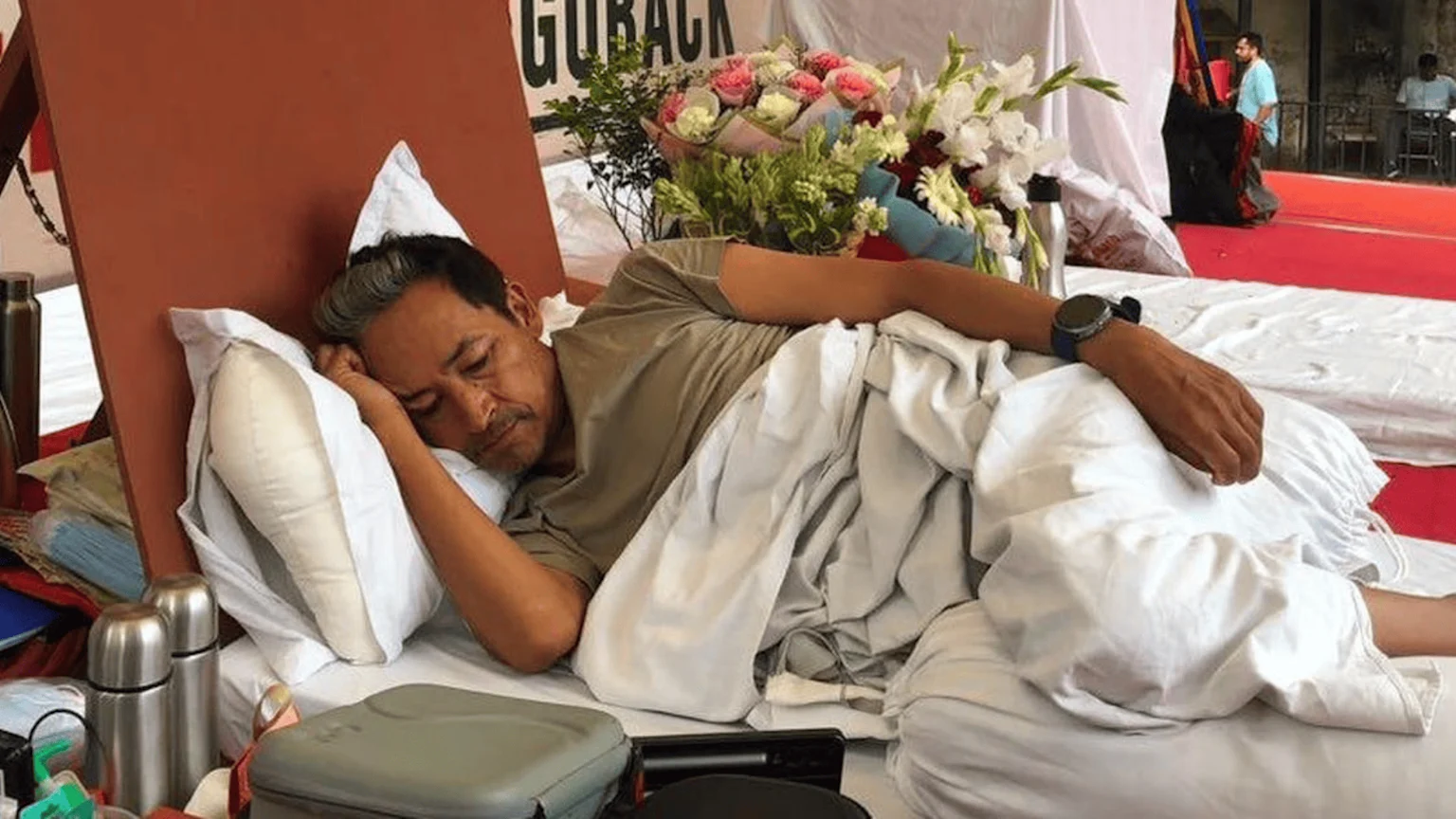
Sonam Wangchuk’s Hunger Strike Hits Critical Phase
Published by Sandy Sekhon
17 Jul 2026
The indefinite hunger strike of prominent educational reformer and activist Sonam Wangchuk has entered a perilous phase. Medical professionals warn that his health is rapidly deteriorating after nearly three weeks without food.
According to his medical team, Wangchuk has lost over 9 kg, sparking severe concerns that the prolonged fast could soon inflict irreversible damage on his vital organs.
Why is Sonam Wangchuk Protesting?
Wangchuk is staging his strike at Delhi's historic Jantar Mantar, standing in solidarity with a nationwide student movement. The protesters are demanding systemic overhauls following massive controversies surrounding national examination paper leaks. Their primary demands include:
Political Accountability: The immediate resignation of Union Education Minister Dharmendra Pradhan.
Irregularity Probe: Complete accountability and transparent investigations into alleged examination malpractice and paper leaks.
Systemic Overhaul: Long-term institutional reforms to India’s standardized examination systems.
Justice for Families: Redress for affected students, including the families of those who tragically died by suicide following the exam controversies.
Despite the growing intensity of the protest, the Central Government has not yet initiated any formal dialogue or major political intervention.
The Judiciary Intervenes: Life vs. The Right to Protest
As concerns for Wangchuk’s life grow, the Delhi High Court has stepped in, issuing strict directives to local authorities. The court ordered that officials must:
Conduct rigorous daily medical examinations of Wangchuk.
Closely monitor his vital health metrics.
Take immediate, appropriate medical action if doctors determine his condition has become life-threatening.
In its ruling, the High Court emphasized a delicate balance: while the constitutional right to peaceful protest is fundamental, the preservation of human life remains the ultimate priority.
"Chalo Parliament" Call to Action
Despite mounting appeals from political figures, legal experts, physicians, and anxious supporters urging him to break his fast, Wangchuk remains resolute.
Refusing to back down, he has asked supporters to stop persuading him to eat. Instead, he has urged citizens to channel their energy into a peaceful "Chalo Parliament" (March to Parliament) scheduled for July 20 to amplify the demand for urgent education reforms.
In Context: India’s History of Iconic Hunger Strikes
Fasting as a tool of political and social resistance has a deep lineage in India. Here is how the duration of Wangchuk’s current fast compares to some of the country's most legendary historical protests:
Bhagat Singh
116 Days1929: Demanded equal rights and political prisoner status for Indian inmates in Lahore Central Jail. Resisted force-feeding and survived on water and salt. (His comrade, Jatin Das, tragically died on Day 63).
Mahatma Gandhi
21 Days1924, 1933, 1943: Undertook 18 major public fasts during the freedom struggle. His longest lasted exactly 21 days, deployed strategically for Hindu-Muslim unity, the anti-untouchability movement, and protesting British WWII policies.
Anna Hazare
13 Days2011: The modern face of anti-corruption. His 13-day fast at Ramlila Maidan paralyzed the political landscape and successfully forced the government to pass the Jan Lokpal Bill in principle.
Published by Sandy Sekhon
17 Jul 2026