Opinion
National's identity crisis is pushing voters straight into Winston's arms

Published by Duncan Garner
08 May 2026
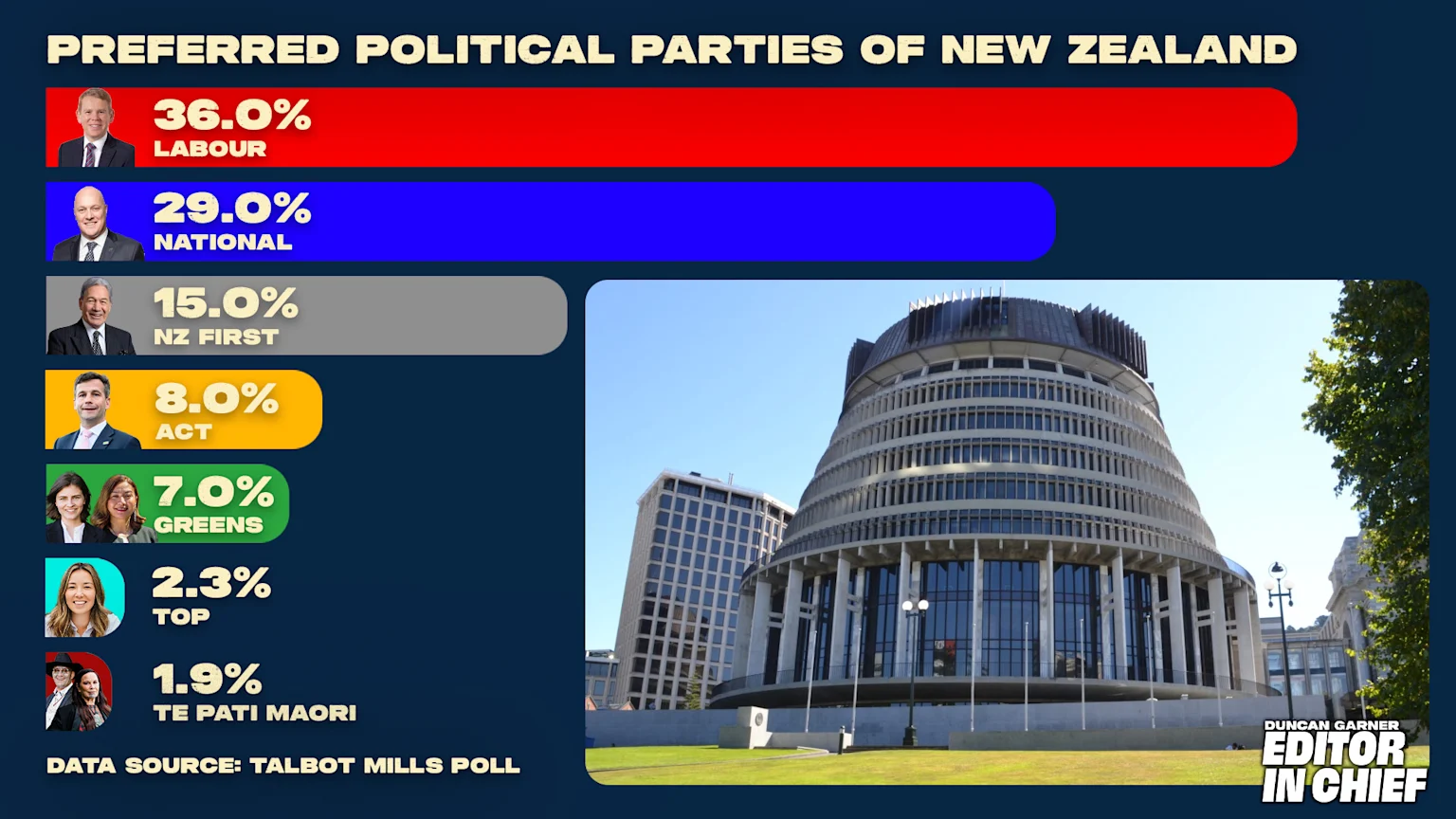
National is below 30 per cent. Labour leads the party vote. Winston Peters is pulling over 12 per cent and rising. If that doesn't make the government panic, nothing will.
The rolling poll of polls tells a brutal story. National sits at just over 29 per cent, Labour at 35, and New Zealand First is now the clear third force in New Zealand politics. The centre-right coalition holds 62 seats, the centre-left 58. That's a one-seat majority. One. That's not governing, that's surviving on borrowed time.
What we're watching is not collapse, not yet. But something has changed in the last few weeks. The gloves are off. The coalition is scrapping publicly, openly, and with real venom. Nicola Willis and Shane Jones are trading blows that look less like friendly fire and more like genuine hostility. Winston and National ministers are no longer pretending to be mates. This isn't the disciplined unity that defined the early phase of this government. This is preparation for divorce.
The longest campaign in New Zealand history
The budget drops on May 28. After that, there are only 20 weeks until the election. That means we are entering the longest, most drawn-out campaign period this country has ever faced. Twenty weeks is a long time to avoid mistakes. It's a long time to hold together a coalition that's already fraying. And it's an eternity when your polling margin is this thin.
This budget is not just an economic document anymore. It's the government's closing argument. It's the last chance to show voters there's a plan, not just excuses. And it's coming at a time when National has no buffer, no breathing room, and no obvious path to pulling ahead.
The paradox is obvious. The coalition can campaign against each other while still needing each other to govern. They can be stable and unstable at the same time. Stable enough to finish the term, unstable enough that every party is now aggressively carving out its own electoral identity before voters lock in their decisions.
National doesn't know who it is anymore
National's problem is deeper than polling. It's an identity crisis. They like the idea of being conservative, but they're too scared to actually be conservative. They don't want to offend their teenage kids or look like bullies. So they stand for nothing. And when you stand for nothing, you look weak.
National campaigned heavily on removing barriers to growth, ending co-governance overreach, and restoring balance. Yet iwi influence has expanded in the regions. Unelected iwi representatives sit on council committees in Northland. Ngāi Tahu stands in front of a goldmine and demands $180 million before it can proceed. National said they'd deal to this. They haven't.
Voters on the centre-right are furious. They were promised action, and they got rhetoric. That's why Winston Peters and Shane Jones are cleaning up. They've sensed the frustration, and they're exploiting it aggressively. They're saying what National won't say. They're taking the positions National is too scared to take. And it's working.
The budget will decide everything
This budget matters more than any economic event of the last three years. National has been in office long enough that voters expect tangible evidence of improvement. They're not getting it. The hopeful economic rebound has remained weak, slow, and invisible in most people's lives. Consumer confidence is fragile. The housing market is flat. Growth has stalled. Households feel squeezed.
If voters begin to think the government is improvising rather than executing a coherent plan, support will evaporate. And they don't have much buffer. Sixty-two seats is not dominance. It's political survival balanced on a razor edge. One ministerial scandal, one bad budget headline, one major Luxon gaffe, one coalition implosion moment, and it's over.
The public doesn't expect miracles. But it does expect evidence of direction. It wants competence, discipline, and intent. National has to demonstrate not merely that conditions are difficult globally, but that it has a credible roadmap out of this. The last two years they've promised today is the day and this year is the year. It hasn't happened.
Two questions will decide the election
This election will narrow down to two brutally simple questions. Do you feel better off than you did three years ago? And regardless of current frustrations, who do you trust more to manage the next three years?
Right now, the numbers suggest National retains only the slightest advantage. But that advantage is so narrow that the next 20 weeks could reshape the entire political landscape. This campaign period is unlike anything New Zealand has faced before. Usually campaigns compress into a frantic final month. This time the real campaign begins the moment the budget is delivered and passed.
Twenty weeks is an extraordinarily long time to remain disciplined. When the margin is 62-58, even the smallest movement can carry huge consequences for the country's direction for the next decade.
National no longer knows who they are or what they stand for. They're too scared to stand for anything, so they stand for nothing. That is a purely weak position, and it allows all those parties around them to define themselves and be strong. The left should be unelectable given their platform. But National is making it a contest by refusing to have a backbone.
Can they find one before the budget? We're about to find out.
Published by Duncan Garner
08 May 2026