New Zealand
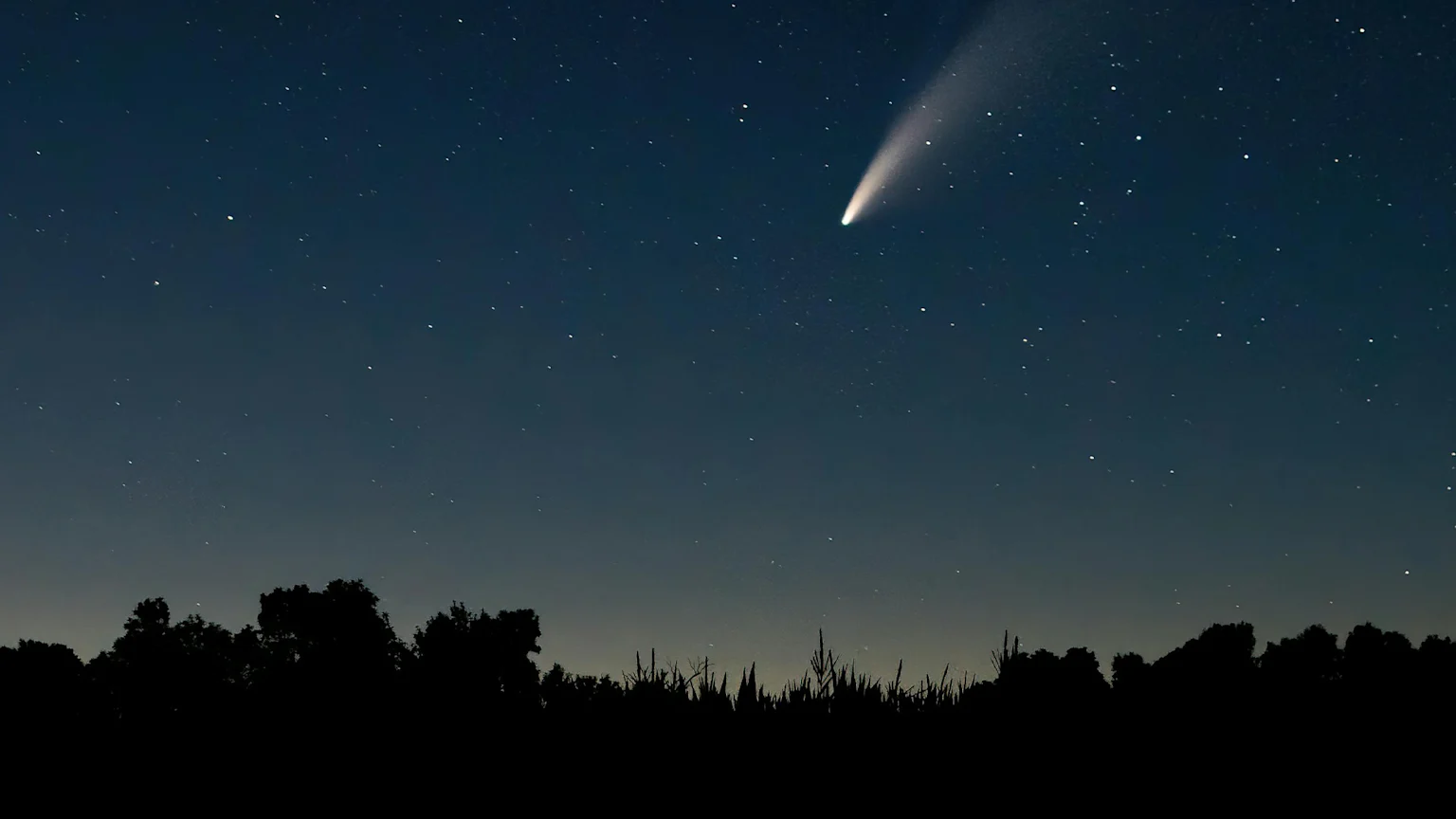
Once-in-170,000-years: How to see the rare comet C/2025 R3 in NZ

Published by Sophie van Soest
01 May 2026
An extremely rare cosmic event is happening above Earth right now, and if you’re in Aotearoa, you’ve got a good shot at seeing it - as long as you look at the right time.
The comet, C/2025 R3 (PANSTARRS), is making a once-in-a-lifetime appearance… Well, one in 1,700 lifetimes, actually.
So, it’s something you don’t want to miss before it disappears!
If you want to catch it this week but are not sure what all the fuss is about? We've got everything you need to know about when and where to see it.
What makes it so special?
Since it was discovered in September 2025, astronomers have worked out its history and where it’s been all this time.
“It was likely formed near Saturn or Uranus in the earliest days of our solar system and was tossed out into the Oort Cloud, then essentially stored in a literal deep freeze for billions of years before recently arriving in our vicinity,” astronomer David Schleicher told National Geographic.
“It has been travelling inward toward the sun for about 160,000 years.”
When can you see comet C/2025 R3 in NZ?
You’ve got about the next two weeks before it disappears.
Astronomers reckon you’ve got about two weeks to catch C/2025 R3 (PANSTARRS) before it’s gone for good.
According to Te Whatu Stardome, the comet is getting a little higher each night in the western sky, which gives us more opportunity to actually be able to see it.
The team at Te Whatu say, “While it’s not visible to the naked eye, this faint visitor has already been captured by astrophotographers across Aotearoa over the past few days.”
The Sky Live gives a clearer idea of what time you should be looking to the Western horizon based on where you’re located around the motu.
How to get the best view?
Because it’s not likely to be visible to the naked eye, timing is everything!
You’ll probably want to grab yourself some binoculars or a telescope - if you happen to have one handy.
To maximise your chances of viewing C/2025 R3, you’ll want to look just after sunset.
Pick a clear night (obviously), get away from city lights - heading rural or up a hill is a good idea - and give your eyes a few minutes to adjust.
And while the idea of a bright comet flashing over Earth is cool, your expectations should be MUCH lower… expect more of a faint glowing smudge.
Still, it’s one worth looking for if you're into these sorts of once-in-a-lifetime experiences, so don’t let it pass by.
Published by Sophie van Soest
01 May 2026