Food & Drink
How a Medieval Middle Eastern Pastry Became India's Favorite Street Food
Published by Ketan Kumawat
03 Aug 2026
Tracing the extraordinary 1,000-year global journey of the world's most famous triangular snack.
FOOD & CULTURE DESK — To millions of street food lovers around the world, the samosa is the ultimate symbol of South Asian comfort food. Hot, crispy, and packed with spiced potatoes and peas, it seems as intrinsically Indian as chai or chicken tikka masala.
Yet, culinary history tells a surprisingly different story. The beloved triangular pastry was not born in the bustling street stalls of Delhi or Mumbai. Instead, it began its journey thousands of miles away in medieval Persia, migrating along ancient trade routes for centuries before receiving a Portuguese makeover that changed South Asian cuisine forever.
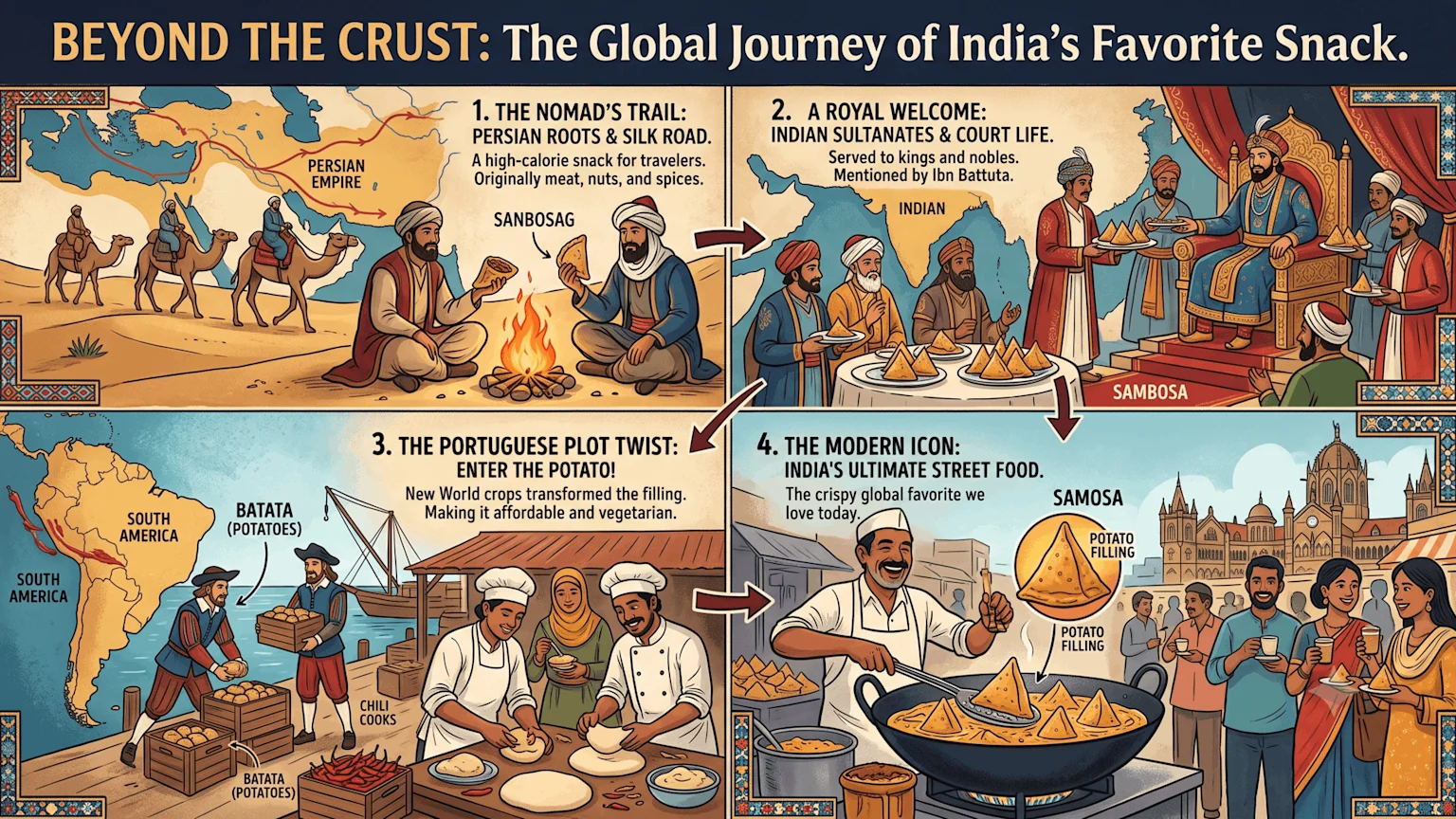
1. The Nomad’s Trail: Born in Middle Eastern Saddlebags
Long before it became a vegetarian staple, the ancestor of the samosa was a rugged, high-calorie snack for Silk Road merchants and nomads. Known in Middle Persian as the sanbosag ("triangular pastry"), early versions were filled with minced meat, nuts, and dried fruit.
Travelers stuffed these durable, savory pockets into their saddlebags to eat over campfire breaks during long, arduous journeys across Central Asia.
Earliest Records: The pastry appears in 9th-century Persian poetry and in the works of 11th-century historian Abolfazl Beyhaqi, who described a delicate sambosa served in the royal courts of the Ghaznavid Empire.
2. A Royal Welcome in the Indian Subcontinent
By the 13th and 14th centuries, Central Asian traders, scholars, and armies brought the pastry across the Hindu Kush into South Asia. Far from being humble street food, it quickly became a luxury dish fit for royalty.
Poetic Praise: In the 1300s, court poet Amir Khusrow noted that royal princes in the Delhi Sultanate feasted on "the samosa prepared from meat, ghee, onion, and so on".
Traveler Testimony: Moroccan explorer Ibn Battuta recorded eating samusak—a pastry stuffed with minced meat, almonds, pistachios, and walnuts—at the court of Sultan Muhammad bin Tughluq.
Mughal Imperial Fare: The 16th-century Mughal administrative text Ain-i-Akbari explicitly details royal recipes for the pastry, proving its continued status as high-society food.
3. The Portuguese Plot Twist: The Potato Revolution
The single most defining feature of the modern samosa—the spiced potato filling—did not exist in Asia until centuries after the pastry arrived.
Potatoes and chili peppers are native to South America and were completely unknown in Asia during the medieval era. In the 16th and 17th centuries, Portuguese traders brought these foreign crops (batata) to Indian ports like Goa.
Local cooks quickly realized that the cheap, starchy potato was an ideal canvas for bold spices like cumin, coriander, ginger, and garam masala. Replacing expensive meat fillings with seasoned potatoes transformed the aristocratic dish into an affordable, vegetarian-friendly street food accessible to everyone.
4. The Samosa's Global Family Tree
As global trade networks expanded, variants of the original sanbosag spread to almost every continent, adapting to local ingredients along the way:
A Truly Global Icon
RegionNameTraditional FillingDistinctive StyleSouth AsiaSamosa / SingadaSpiced potatoes, peas, or minced meatFlaky, deep-fried wheat pastry shellMiddle EastSambusakMinced beef, pine nuts, or salted cheeseBaked or fried, often crescent-shapedHorn of AfricaSambusaHeavily spiced beef, lentils, or fishWrapped in thin, spring-roll-style pastryCentral AsiaSamsaDiced mutton, onions, and cuminBaked in a traditional clay tandoor ovenPortugal & GoaChamuçaMinced pork, beef, or spiced chickenDistinct Portuguese spice-blend filling
Published by Ketan Kumawat
03 Aug 2026