Sport
Gilbert Enoka returns: fixing the All Blacks from the inside out

Published by rova and Martin Devlin
15 May 2026
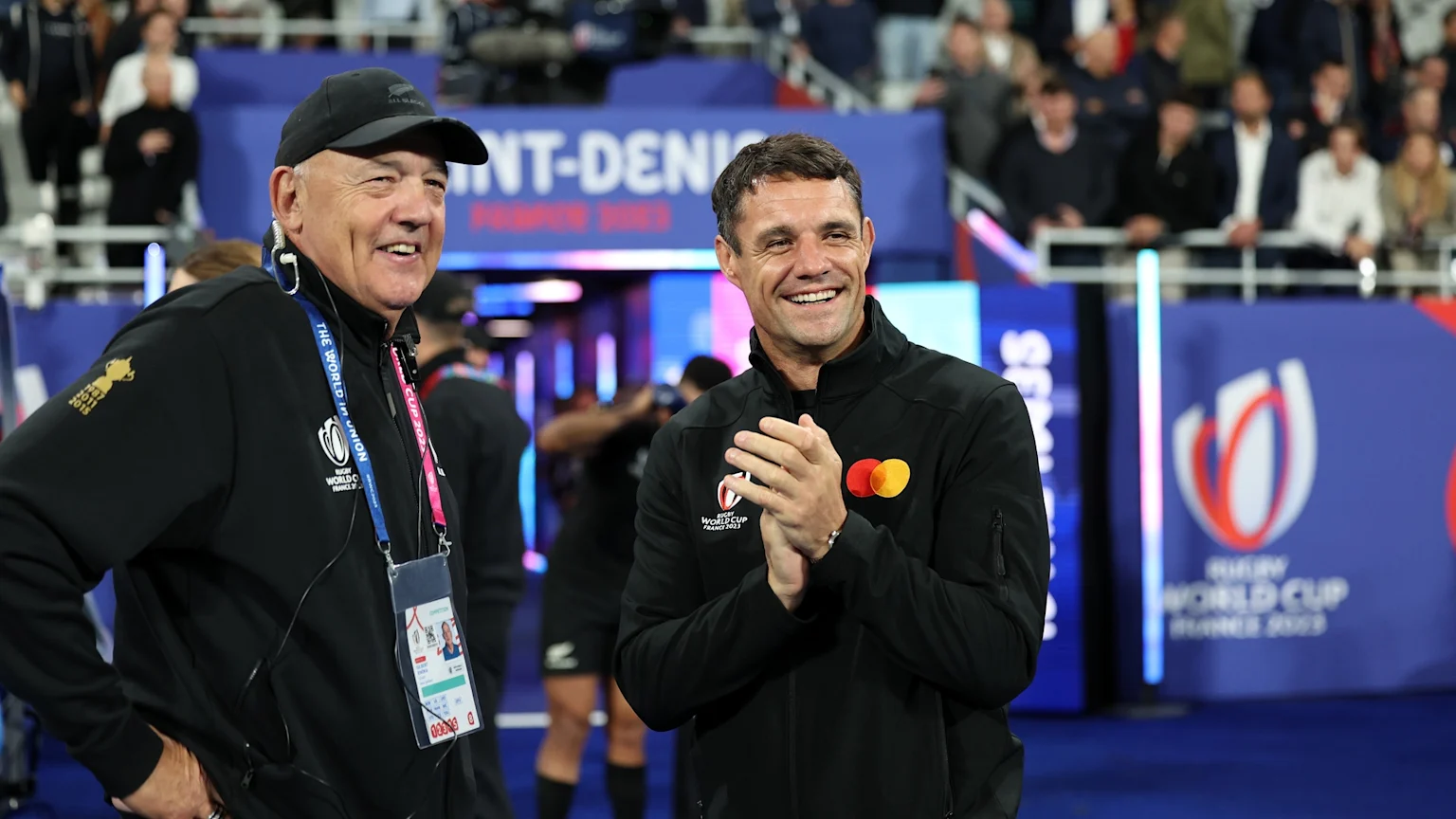
The All Blacks' mental skills coach for two decades is back, and he hasn't bothered reading the review. Gilbert Enoka, the man credited with embedding the 'No Dickheads' policy and shaping the championship-winning cultures of 2011 and 2015, has rejoined Dave Rennie's management team without demanding a post-mortem of last year's struggles.
It's a calculated approach. Rather than dissecting what went wrong under the previous regime, Enoka is meeting the current squad where they are observing, listening, determining what this group needs to perform under pressure. The principles haven't changed, but the context has. And for Enoka, that context begins with one non-negotiable truth: "If it's not right at the top, it's unwinnable down below."
When success becomes the harder challenge
Most of us assume Enoka's job gets easier when the wins stack up. He says the opposite is true.
"I've actually found my work inside the environment tougher when we're having a lot of success," he explains. "People get caught up in the glow of that success, all the fanfare, all the applause. When things aren't going well, the ears are wide open and people are listening."
It's a sharp observation. Losing environments breed humility and urgency. Winning ones risk complacency, entitlement, and the slow erosion of standards. According to Enoka, the key is never getting stuck whether you're trapped by self-doubt or blinded by victory. Both are problems only if they stop you moving forward.
At a recent reunion of the 2011 and 2015 World Cup-winning squads, Enoka reconnected with the leaders of that era. What struck him most was their commitment to ownership, accountability, and adherence to non-negotiable standards. "I think we've softened in that regard," he admits. "We have to go back and strengthen the individual leader's commitment to ensuring we know what the standards are, that we have the courage to hold each other accountable."
Leadership is personal, not positional
Rennie and Enoka are currently rethinking the All Blacks' leadership model from scratch. The shared leadership structure, pioneered back in 2005 under Graham Henry, removed hierarchy and distributed responsibility across a group. Now they're asking whether that model still fits.
"Leadership's more personal than it's positional," Enoka says. "You lead from who you are rather than where you sit. It's about what personal qualities you bring in this moment to this team."
That means the leadership group won't necessarily be filled by the most experienced players. It'll be filled by those who can challenge teammates when standards slip, who can hold difficult conversations, and who embody the behaviours they demand from others. Enoka is adamant that leadership must be taught, not assumed. "When the leader improves, everyone gets better."
He's also clear on what happens when someone doesn't fit. The infamous 'No Dickheads' policy wasn't about suppressing individualism. It was about removing people whose selfishness undermined the team. "Is it a development issue or a replacement issue?" Enoka asks. "That's just a nice way of saying, 'You're a dickhead, or we can help you improve.'"
The jersey is the multiplier
New Zealand's talent pool is what it is. The environment determines whether that talent shines or dulls. "The environment is a multiplier," Enoka says. "If it's not right, it can dull the talents of individuals. If it is right, it'll accelerate and amplify it."
The jersey itself, the legacy, the connection to teammates, the weight of those who wore it before, remains the most powerful force in New Zealand rugby. Enoka thinks often of Brian Lohore and Jock Hobbs, imagining them sitting quietly in the corner, watching. Would they nod? Would they smile? It's his litmus test.
Heading to South Africa for a three-test series later this year offers the perfect proving ground. "Who knows what'll end up happening over there," Enoka says, "but crikey dick, you wouldn't wanna be anywhere else in the world."
Is 10 days of preparation before the first test enough? Never, he admits. But the All Blacks don't get a pre-season. They don't get 12 weeks to drill identity and systems. They get bite-sized chunks and must prioritise ruthlessly. Less is more. Do fewer things, but do them properly.
The talent will always be enough, Enoka insists. Whether it gets expressed consistently over time — that's the real question. And that's where his work begins.
Published by rova and Martin Devlin
15 May 2026