Politics
Gerry Brownlee: Vote-splitting could keep a party in power indefinitely

Published by Duncan Garner
11 Nov 2026
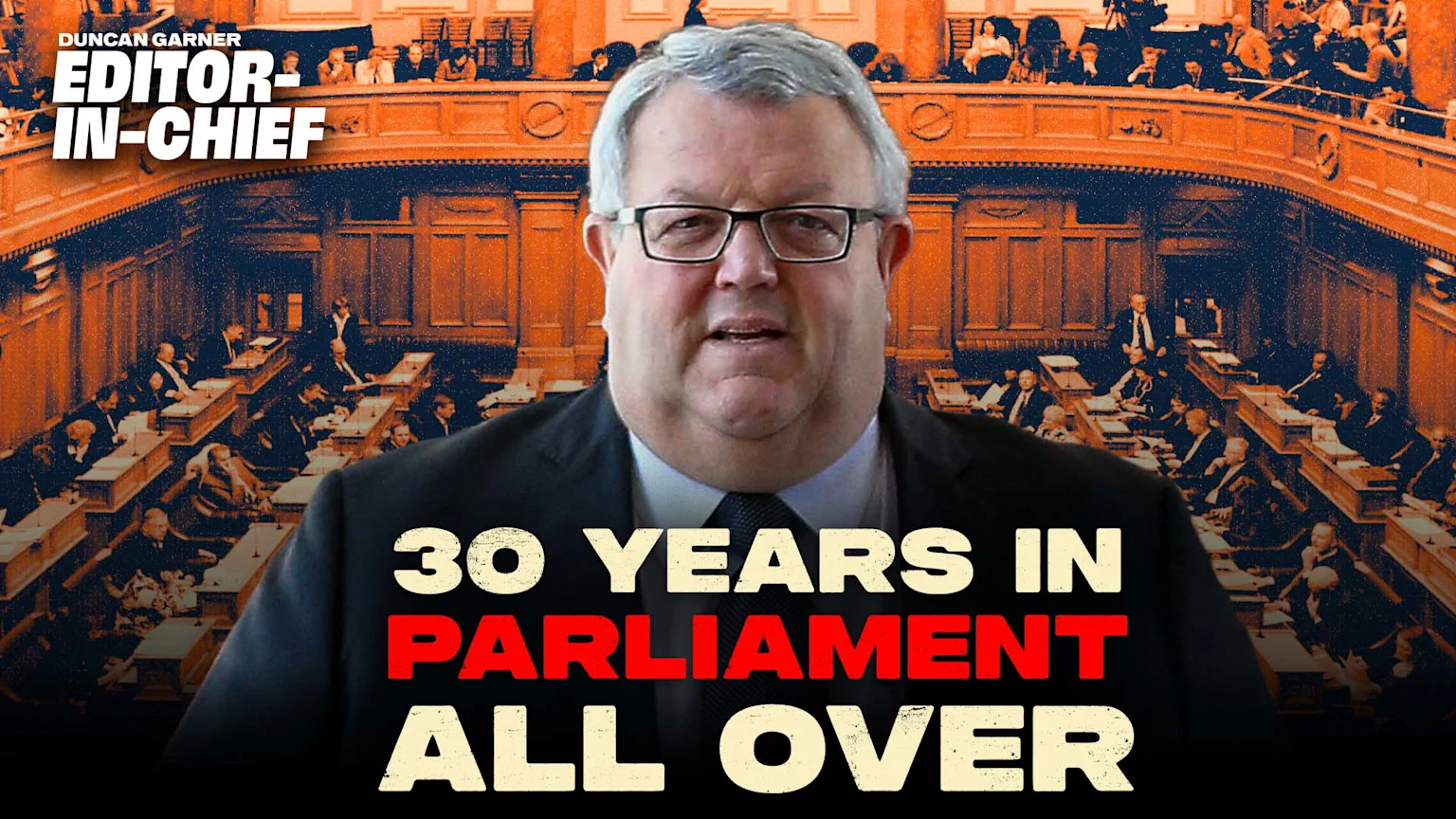
Gerry Brownlee has spent 30 years in Parliament. He’s seen prime ministers come and go, governments rise and fall, and just about every political trick in the book.
So when he tells me he’s uneasy about the way our electoral system has been used at this election, I reckon we should listen.
The outgoing Speaker and longtime National MP says the scale of tactical vote-splitting has exposed a problem with MMP, and he believes it should be looked at.
His concern is that, taken far enough, it could dramatically increase the size of Parliament and allow a party to keep itself in government by winning electorate seats while its supporters give their party votes elsewhere.
“You can perpetually stay in government if you keep doing that,” Brownlee told me on Duncan Garner: Editor-in-Chief.
“And I think that’s a real perversion of what MMP was supposed to be about.”
That’s a hell of a thing for a senior National figure to say, particularly when his own party stands to benefit from the outcome.
But let’s be clear. Brownlee is not saying the election was rigged or that the people elected to Parliament have done anything wrong.
“Everyone is perfectly legitimately elected, there’s no question about that,” he said.
The votes were cast under the rules we have. The question Brownlee is asking is whether those rules are still fit for purpose.
How did we get here?
Under MMP, you get two votes: one for the candidate you want to represent your electorate and one for the party you want in Parliament.
Normally, a party’s share of the party vote determines roughly how many seats it gets. But if a party wins more electorate seats than its party vote would otherwise entitle it to, those electorate MPs still take their places. Parliament gets bigger to accommodate them. That’s called an overhang.
This election, some voters were encouraged to give their electorate vote to a National candidate and their party vote to another party.
Brownlee is worried about what happens if that approach is repeated and grows.
He argues it could allow a party to hold a large number of electorate seats while votes for other parties add more MPs to Parliament. In an extreme scenario, he says, the House could reach around 150 MPs.
That’s his hypothetical scenario, not a prediction of the final size of this Parliament.
But hang on, Gerry
I put it to him that vote-splitting isn’t new. Not even close.
I remember the 1996 election and Wellington Central, where National’s Jim Bolger made it clear he wouldn’t mind ACT’s Richard Prebble winning the seat. We’ve had other arrangements since, including John Key’s famous cup of tea with John Banks.
National has been more than happy to benefit from voters thinking tactically when it suited.
“Vote splitting’s been around, Gerry, for decades,” I said.
“Well, y-yes it has, but not to the, the extent where people were encouraged to give their party vote, their, their con- uh, sorry, electorate vote, uh, to candidates from, from one party and, uh, their party votes to candidates from either of two other parties,” he replied.
“That’s, it’s, it was-- And it’s never been something that’s been, uh, done from the outside.”
Brownlee pointed to the earlier examples too. His argument is that this time was different because the campaign was much bigger.
“So, uh, yeah, that, that’s, um, that, that has been, uh, the case, but it’s been relatively limited. Not, not a big campaign like this.”
I understand the distinction he’s making. But I also think we need to be honest about the history. Politicians have been finding ways to work the MMP system for as long as we’ve had it. They tend to be more comfortable with those tactics when the result goes their way.
And here’s the other thing: nobody forced people to split their votes. Voters made a choice using the two votes Parliament gave them.
Brownlee acknowledges that too. Later in our conversation, he said: “It’s voters who make these decisions.”
Is it time for a review?
Every election is reviewed, and Brownlee expects questions about vote-splitting and the resulting overhang to be part of that discussion.
“I can’t imagine that, uh, when Parliament does its review of the elections, that there isn’t some recommendation from Parliament about having another look at the electoral act,” he said.
He also said he wouldn’t be surprised if Parliament considered a broader look at the rules, 30 years after MMP was first used.
When I asked whether he was uneasy about the way the system had been used, he was direct.
“I’m personally uneasy about it and I’ve made that brief. But, um, you know, I’m, uh, once the Commission opening of Parliament starts, then I’m just a member of the public, so I’ll make my submissions, uh, at the end if I, if I choose to.”
That doesn’t mean the rules will change. And it doesn’t mean they necessarily should. But after an election like this one, surely it’s a conversation worth having.
We should wait for the special votes and the final result before making sweeping claims about exactly what this election has delivered. But Brownlee has raised a bigger question that won’t go away when the counting is done.
Is tactical vote-splitting a problem with MMP, or are voters simply using the system as they’re entitled to?
I’d love to know what you think. Email me at duncan@rova.nz.
Published by Duncan Garner
11 Nov 2026