Food & Drink
From Poor Man’s Meal to Royal Treat: The History of Pizza
Published by Ketan Kumawat
22 Jul 2026
Take a slice of dough, slather it with tomato sauce, top it with cheese, and bake it until bubbling. Today, pizza is a multi-billion-dollar global industry, served everywhere from fast-food counters to Michelin-starred dining rooms. But if you were to travel back to 18th-century Italy, offering someone a slice of pizza might have been taken as a mild insult.
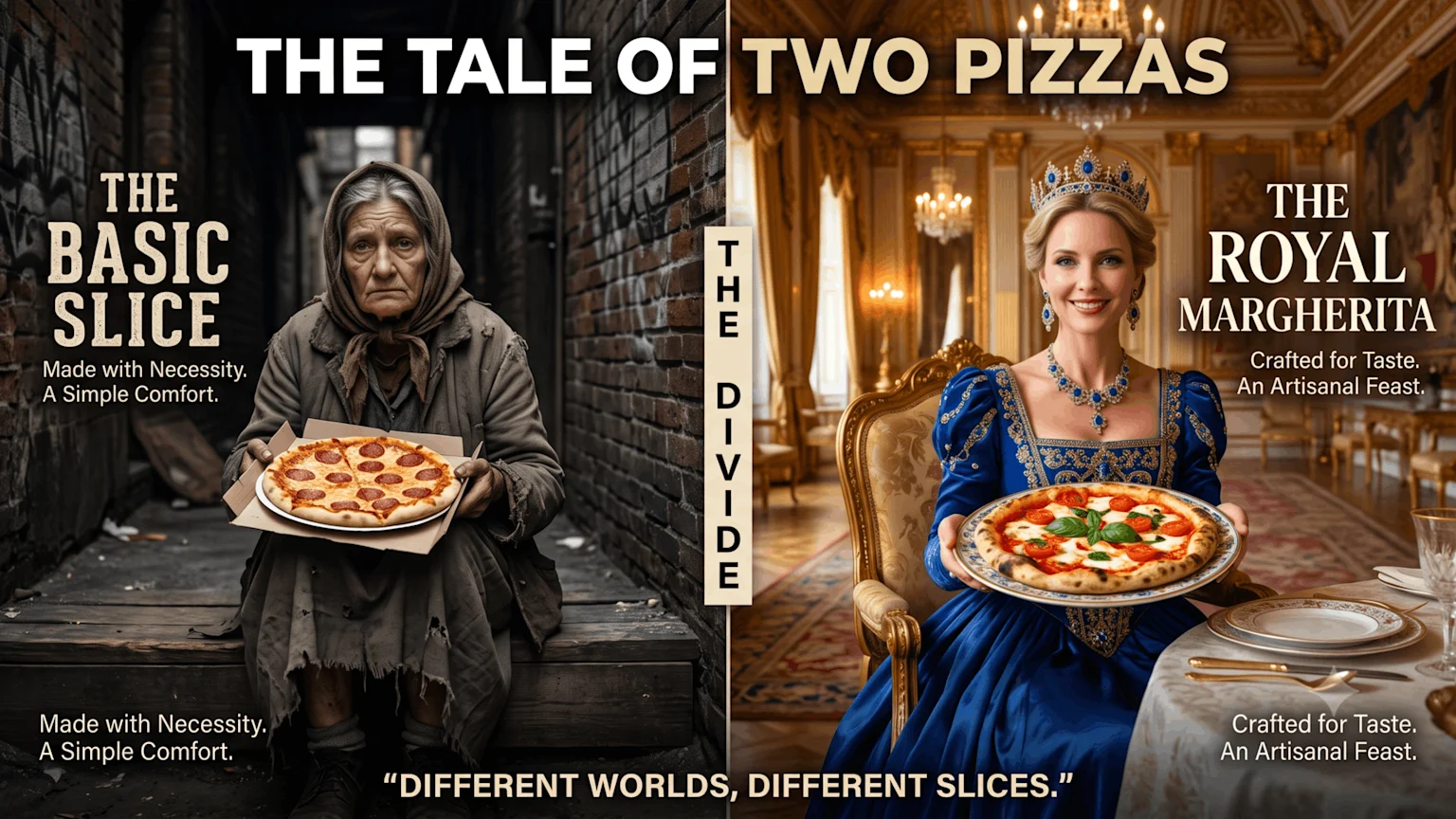
For centuries, pizza was not a celebrated culinary icon—it was a cheap, survivalist food crafted specifically for the poorest laborers on the streets of Naples.
The Food of the Lazzaroni
In the late 1700s, Naples was one of Europe’s largest and most densely populated cities. Thousands of its residents belonged to a destitute working class known as the lazzaroni. Struggling to get by on meager daily wages, these workers needed meals that were fast, portable, and above all, cheap.
Enter the flatbread. Local street vendors began selling flat wheat bread topped with whatever low-cost ingredients were on hand: lard, garlic, coarse cheese, and salt. When tomatoes were brought over from the Americas, wealthy aristocrats initially shunned them, suspecting the red fruit was toxic. Naples' working class, however, had no such luxury of fear. They embraced the cheap tomato, unknowingly inventing the classic base of modern pizza.
Vendors would slice the flatbreads into custom sizes based on what a laborer could afford. Pizza was designed to be folded up and eaten on the move—the original street food for people who had neither the time nor the money to sit down at a table.
Looking Down on the Crust
For a long time, elite society viewed pizza with sheer disdain. Wealthy travelers visiting Naples described the dish as unhygienic, greasy, and unpleasant. Early 19th-century food writers frequently sneered at the street vendors, associating the dish strictly with poverty, filth, and disease.
Pizza remained locked in the shadows of "proper" Italian cuisine for over a century, confined almost exclusively to the working-class neighborhoods of Naples.
A Royal Stamp of Approval
The tide finally turned in 1889, nearly two decades after the unification of Italy.
According to culinary legend, King Umberto I and Queen Margherita visited Naples. Growing weary of the rich French cuisine standard in royal courts, the Queen requested a taste of the local street specialty.
Local pizza maker Raffaele Esposito was summoned to prepare three varieties. The Queen’s clear favorite was a simple pie topped with red tomatoes, white mozzarella cheese, and fresh green basil—mirrors of the colors of the Italian flag. Intrigued and delighted, she sent a letter of thanks to Esposito. In return, the pizzaiolo named the creation in her honor: the Pizza Margherita.
A Global Phenomenon
While the royal blessing gave pizza a veneer of respectability in Italy, its leap to global dominance was sparked across the Atlantic.
In the late 19th and early 20th centuries, waves of Italian immigrants settled in industrial American cities like New York, Chicago, and Philadelphia. They brought their pizza recipes with them, opening neighborhood bakeries that served local factory workers—once again feeding the working class.
It wasn't until after World War II, when returning American soldiers developed a craving for the Italian pies they had eaten abroad, that pizza exploded into mainstream culture.
Today, while gourmet chefs top pizza with everything from truffle oil to caviar, the heart of the dish remains unchanged: simple, humble ingredients coming together to bring people a little comfort on the go.
"Pizza was the original street food—designed to be folded and eaten on the move by people who had neither the time nor the money to sit down at a table."
Published by Ketan Kumawat
22 Jul 2026