Opinion
Duncan Garner: Winston’s BNZ Dream Is Economic Nonsense

Published by Duncan Garner
18 May 2026
Compulsory KiwiSaver is the future, but buying back BNZ is an expensive trip down memory lane New Zealand cannot afford.
Winston Peters has managed something rare. He has put one very good idea inside one truly terrible one.
Making KiwiSaver compulsory makes sense. It should have happened years ago. New Zealand has spent too long pretending retirement savings are optional, as if the state pension will magically stretch forever while the population ages, birth rates fall, and fewer workers are left carrying more retirees.
That is not policy. That is denial with a government logo on it.
Watch the full discussion here:
Australia worked this out decades ago. Workers save. Employers contribute. Big pools of local capital are built. People retire with more dignity and less dependence on politicians finding money that does not exist. Meanwhile, New Zealand keeps behaving like we can muddle through on hope, property prices, and a pension promise future taxpayers may not be able to keep.
So yes, compulsory KiwiSaver is smart. It builds discipline. It builds ownership. It gives younger New Zealanders a better chance of not reaching old age broke, renting, and wondering who sold them the lie.
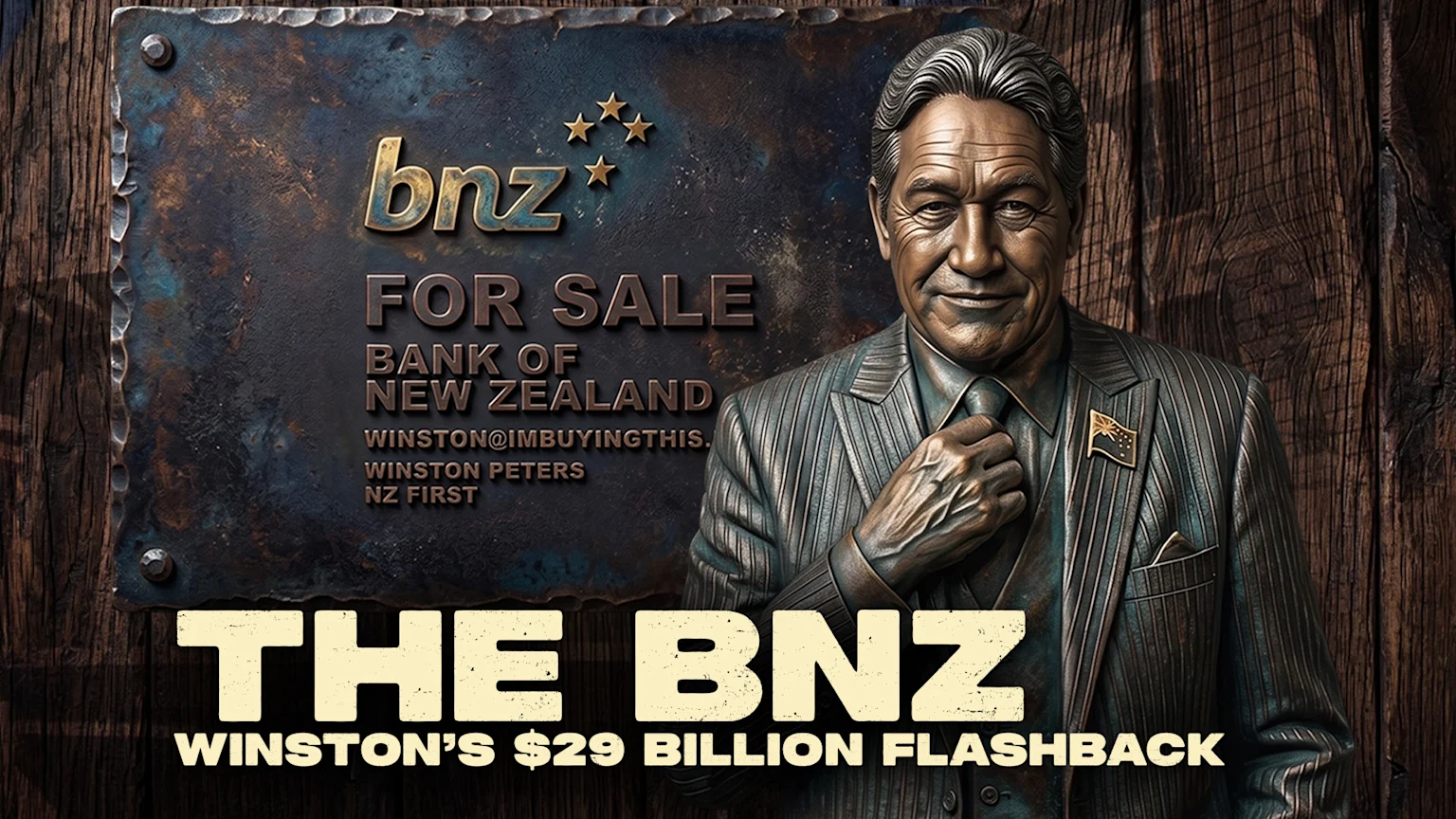
Then Winston drives the whole thing off the road by suggesting taxpayers buy back BNZ.
Honestly, what is this? Nostalgia dressed up as economic policy. The BNZ was sold decades ago. It is gone. Finished. We do not need to spend tens of billions buying back a commercial bank because some politicians miss the old days.
New Zealand cannot build ferries without blowing itself up politically. We cannot build roads, hospitals, classrooms, or basic government IT systems without costs exploding. And now we are supposed to believe the state should become a master banker?
Come on.
If the problem is foreign-owned banks making too much money, then regulate harder. Encourage competition. Make switching banks easier. Back Kiwibank properly. Cut the barriers for challengers. There are ways to attack bank profits without writing a cheque the size of a small war.
The figure being tossed around is about $29 billion. Imagine that. Twenty-nine billion dollars to buy back an asset from another era while health is stretched, infrastructure is crumbling, schools need classrooms, and taxpayers are already being squeezed dry.
This is Winston at his most Winston. One foot in the future, one foot in the museum.
Listen to the full episode:
Published by Duncan Garner
18 May 2026