Politics
Duncan Garner "The Greens’ Tax Fantasy Punishes Success"
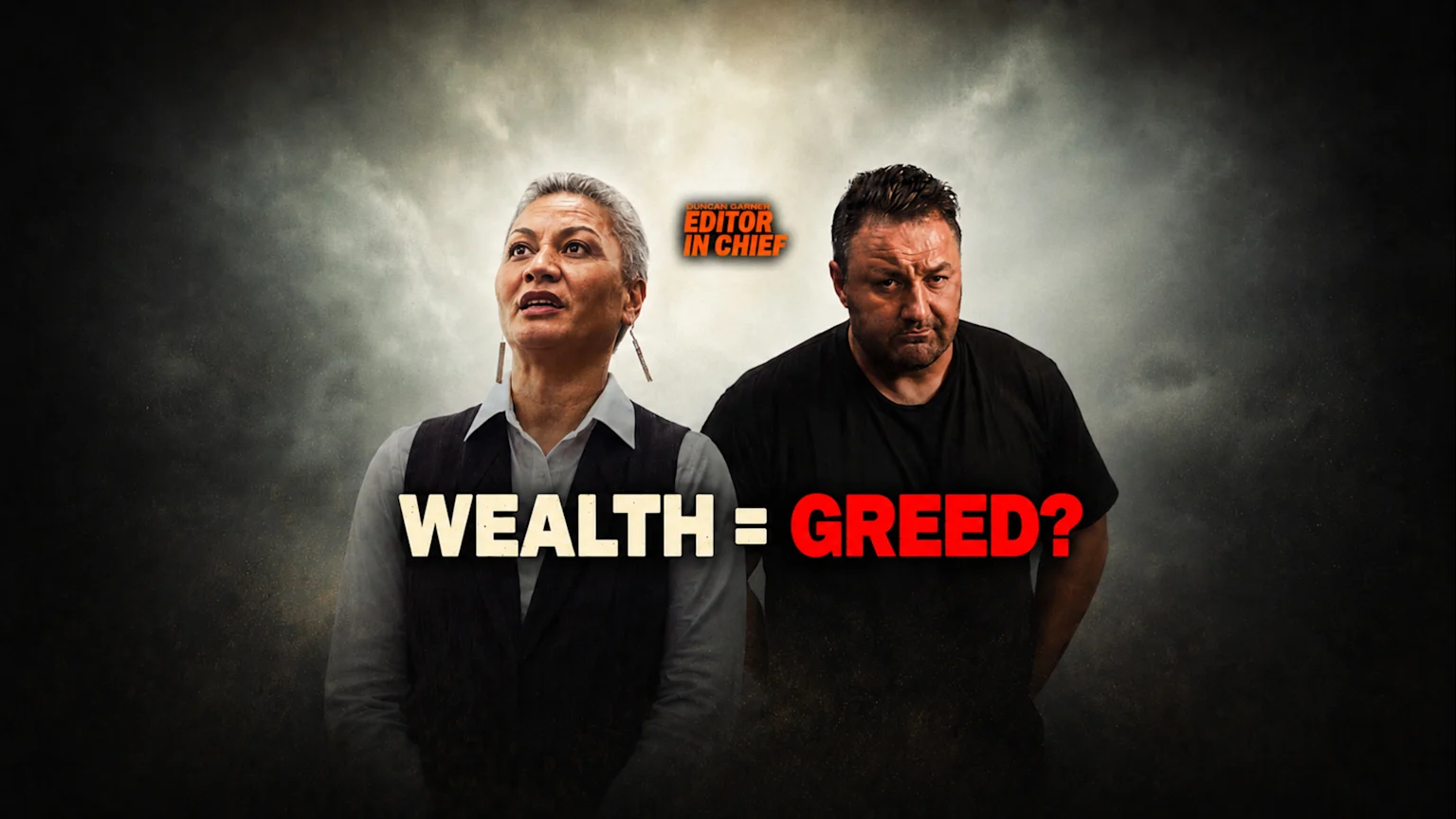

Published by Duncan Garner
25 Jun 2026
The Greens’ tax policy is not a serious plan to rebuild New Zealand. It is an ideological shopping list built on the comforting fiction that a small group of rich people can pay for everything, nobody will change their behaviour, capital will stay put and the economy will somehow keep humming.
That is fantasy economics.
The package piles tax upon tax: an annual wealth tax, an inheritance and gift tax, a 45 percent top income-tax rate above $160,000, higher company tax, new taxes on banks and international technology firms, and the reversal of tax changes for landlords. The sales pitch is simple. Most people will get something, while a tiny group of villains will pick up the bill.
It is politically clever because envy is easy to sell. Economic reality is harder.
The Greens say they are targeting the super-rich, but that term is wonderfully elastic. A household with valuable assets is not necessarily swimming in cash. A business owner may have spent 30 years building a company that employs dozens of people. A farmer may sit on expensive land while struggling to meet the next interest payment. These people are not automatically greedy. They are often the people carrying the risk.
And risk matters. Without it, there are fewer businesses, fewer jobs, less investment and less tax revenue to redistribute in the first place.
Janet Wilson put her finger on the problem on the podcast today when she called it “the law of unintended consequences”. She is right. Governments can write tax rules. They cannot order wealthy people, investors and entrepreneurs to remain in New Zealand and quietly accept them. Some will restructure their affairs. Some will stop investing. Some will leave.
That is not a threat. It is what rational people do when a government makes them feel like a revenue target rather than a valued part of the economy.
The Greens also damaged their own case by having to correct an $800 million error in the policy. That is not a typo in a press release. It goes directly to credibility. When a party wants billions more from taxpayers, it had better know exactly how much it expects to collect, from whom, and what happens when those people change their behaviour.
Ashley Church’s verdict was brutal but fair: “They cannot be trusted anywhere near anything to do with the finances of the country.”That is the political risk here. A tax programme this sweeping cannot be treated like a university seminar where mistakes are part of the learning process. This is a bid to influence the next government.
Labour may distance itself now, but election promises have a habit of becoming negotiating chips once the coalition arithmetic gets tight. That is why voters should not dismiss this as harmless Green theatre. Small parties do not need to win the Treasury benches to shape tax policy. They just need the larger party to need their votes.
New Zealand does have an inequality problem. We have families working full-time and still falling behind. We have a broken housing market, weak productivity and public services under pressure. But punishing accumulated wealth is not the same as building prosperity. Taking a larger slice of a weak economy does not make the economy stronger.
The answer is growth, investment, better wages, competitive businesses and a tax system people broadly accept as fair. The Greens are offering something else: a moral judgement disguised as a balance sheet.
New Zealanders do not need to be taught that success is suspicious. We need a government that makes success possible.
Published by Duncan Garner
25 Jun 2026