Opinion
Duncan Garner "The Big Parties Have Lost Their Grip"

Published by Duncan Garner
24 Jun 2026
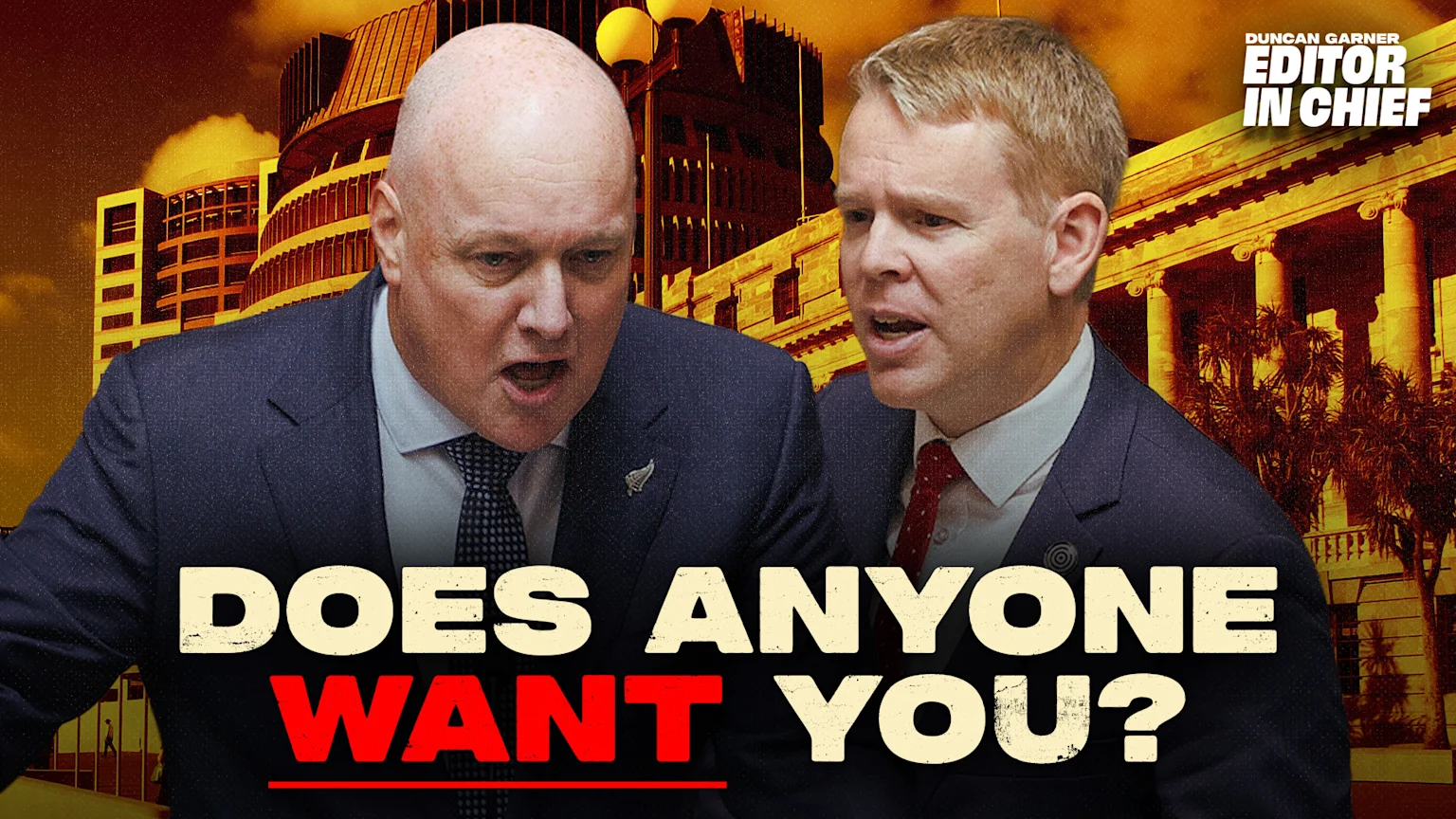
National and Labour have spent 30 years telling New Zealanders they are the only serious choices. The latest poll suggests voters are no longer buying it.
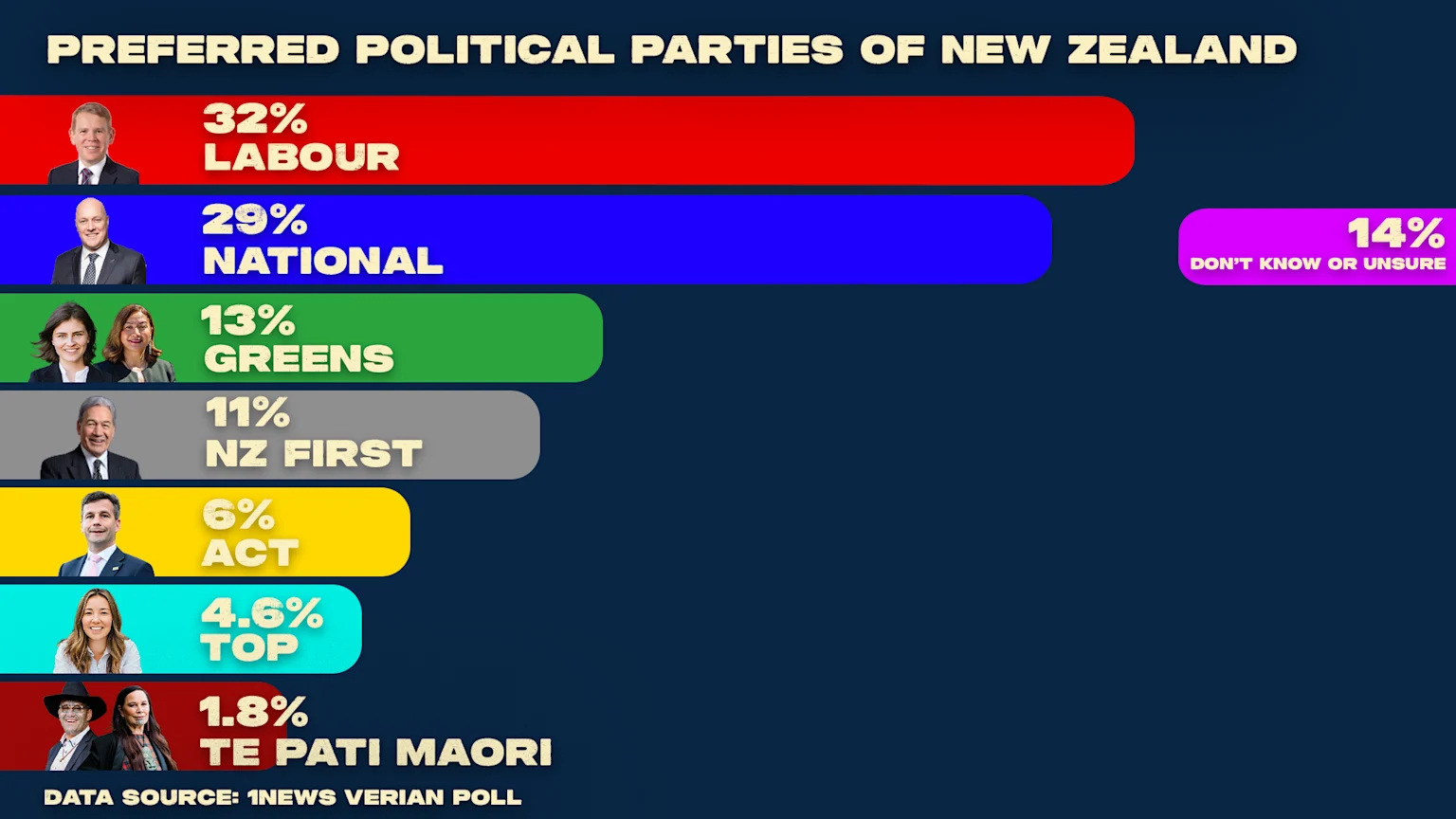
National is on 29 percent. Labour is on 32. Together, the two dominant parties command just 61 percent support, their lowest combined result since MMP began. TOP is sitting at 4.6 percent, close enough to Parliament that it can no longer be dismissed as a political science experiment.
As I said on today’s episode of Editor in Chief: “You’re both utterly uninspiring and not doing enough.”
Watch the full episode:
That is the message Christopher Luxon and Chris Hipkins need to hear. Luxon talks about a long-term plan, but the country is still waiting to feel it. Hipkins promises an alternative, but Labour’s recent offerings look rushed, thin on detail and designed to survive the news cycle rather than change the country.
Neither man has clearly explained what he is prepared to fight for.
Luxon governs like a chief executive protecting the quarterly report. Hipkins opposes like a man scared of upsetting anyone who might vote Labour. One manages the status quo. The other offers a slightly softer version of it.
Meanwhile, the serious problems remain.
Economic growth is weak. Productivity is poor. Infrastructure takes forever. Housing remains out of reach for too many working people. Hospitals are under pressure, roads take decades and every difficult reform is handed to another review.
Superannuation is the obvious example. The population is ageing, the cost is rising and younger taxpayers will be expected to carry more of the burden. Treasury knows it. Economists know it. Politicians know it privately.
But saying so publicly might cost votes, so the debate is postponed again. That is not careful leadership. It is political cowardice.
This is the vacuum the smaller parties are filling.
New Zealand First gives angry voters somewhere to send a message. ACT benefits when National looks timid. The Greens gain when Labour loses its nerve. TOP attracts people who are sick of the old brands and want something that at least appears fresh.
But fresh does not automatically mean credible.
TOP is now close enough to five percent that its policies deserve proper scrutiny. Not another flattering profile about new faces and good intentions. Its tax plans, climate policies and justice proposals must be pulled apart, costed and tested.
A small party can hold enormous power under MMP. Winston Peters has spent decades proving that. Voters need to know what TOP would demand before handing it the leverage to decide who governs.
Still, blaming the minor parties would be pathetic. They did not create this moment. National and Labour did.
After decades of trust, power and tax revenue, neither party can point to enough progress to justify its dominance. New Zealanders can see roads promised but never built, hospitals still overwhelmed, schools struggling and infrastructure allowed to decay.
They can also see politicians claiming progress while ordinary life becomes harder and more expensive.
The public is not demanding miracles. It is asking for direction, urgency and evidence that somebody is prepared to make a difficult decision and defend it.
National and Labour keep warning voters about the risks posed by smaller parties.
They should be more worried about the risk of giving people no reason to vote for them.
Listen to the full episode:
Published by Duncan Garner
24 Jun 2026