Politics
Duncan Garner: Media Failed Ratepayers on Co-Governance

Published by Duncan Garner
21 Jul 2026
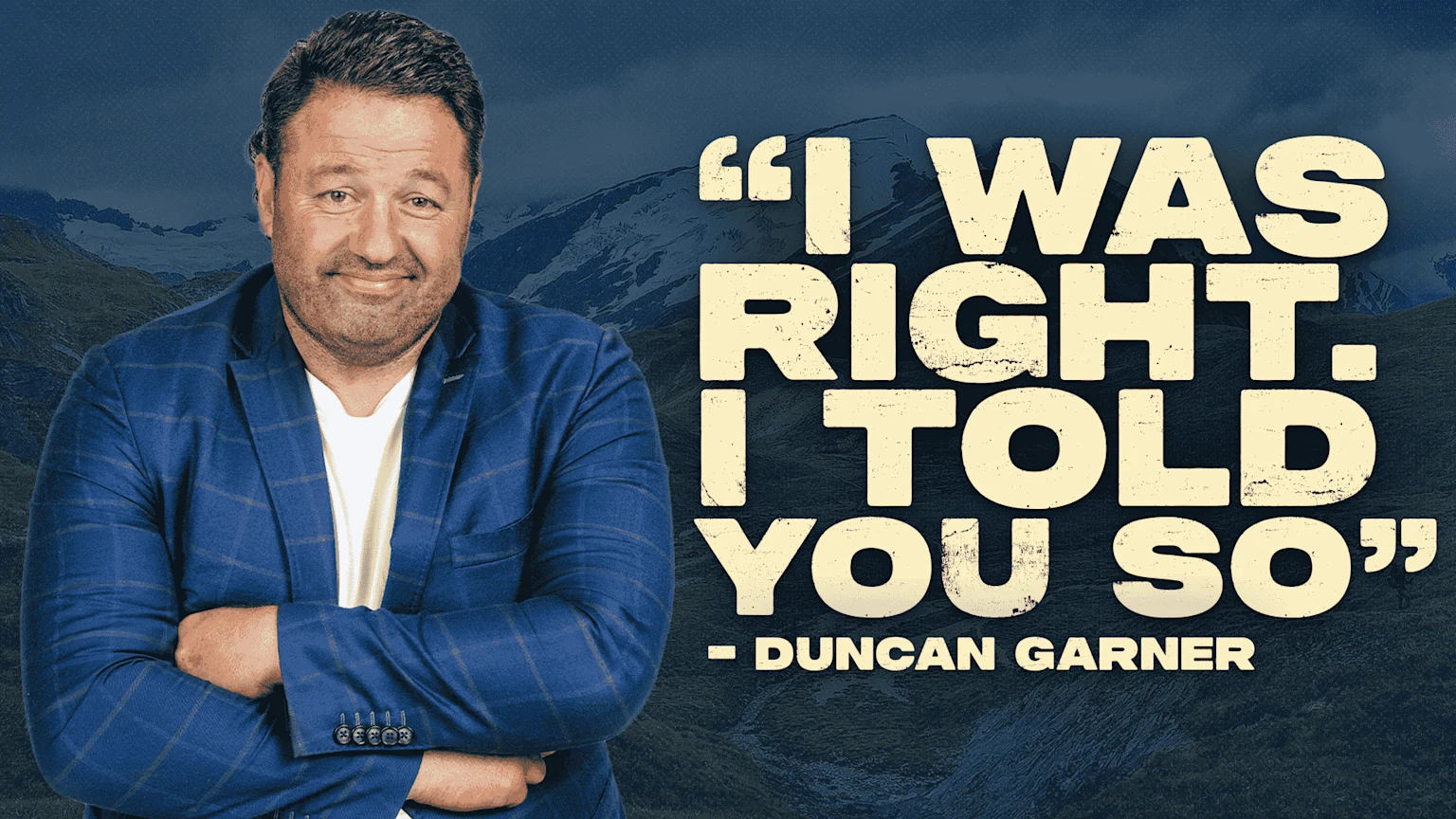
I told you so.
Yes, that sounds arrogant. I know it does.
But after nearly two years of warning that co-governance had not disappeared, but had quietly moved into local government, somebody has to say it.
While most of the media looked the other way, councils around New Zealand were entering Mana Whakahono ā Rohe agreements with iwi.
These agreements were not minor ceremonial documents. They established how iwi authorities would participate in resource management and planning processes. The Government now says the number of existing or initiated agreements surged from eight late last year to several dozen.
That increase was significant enough for Cabinet to change the law.
Watch the full episode below
Existing and initiated agreements will no longer automatically transfer into the new planning system. Councils will instead be able to enter more narrowly defined iwi participation agreements, with legislative guardrails intended to prevent their scope expanding.
So much for there being nothing to see here.
For two years, I have called this co-governance on steroids.
The phrase offended people.
Good.
Journalism is not supposed to be a popularity contest. The test is not whether the language makes everybody comfortable. The test is whether the issue is real, whether the facts stack up and whether the public deserves to know.
Ratepayers deserved to know.
These decisions were happening inside the councils they fund, affecting planning, infrastructure, development, land use and the future shape of their communities.
Yet the public debate was nowhere near the scale it should have been.
Too many newsrooms became paralysed by the fear of being criticised. They worried that asking hard questions about co-governance would see them labelled racist, divisive or hostile to Māori.
So they hesitated.
They looked over their shoulders.
They found reasons not to investigate.
That is not caution. It is a failure of journalism.
As I said on the podcast, the basic job is to find the story, ask the questions and tell people what is happening. Too many journalists became more concerned about the reaction than the facts.
Let me be clear.
This is not an argument for excluding Māori from local decision-making.
Iwi have legitimate interests. Treaty settlements must be honoured. Councils should consult the communities affected by their decisions, including mana whenua.
The issue is power, transparency and democratic accountability.
What authority was being transferred?
What decisions could be influenced or delayed?
What obligations were councils accepting?
How much would those arrangements cost?
Could ratepayers see the agreements before they were signed?
Who was accountable if they produced poor outcomes?
Those were reasonable questions.
They still are.
Instead of answering them, some councils and commentators behaved as though asking the questions was itself unacceptable.
That attitude created the perfect environment for arrangements to grow without the level of public scrutiny they deserved.
The Office of the Auditor-General describes Mana Whakahono ā Rohe as a mechanism allowing tangata whenua and councils to agree how they will work together under the Resource Management Act. That sounds reasonable enough. But any agreement involving public authority must still be open to inspection, debate and challenge.
Democracy does not end because an issue is culturally sensitive.
In fact, that is when strong journalism matters most.
Far North councillor Davina Smolders understood that. Before she was elected, she spent her own money making signs and stood on the side of the road warning locals about the agreement being considered in her district.
She was mocked, criticised and, according to her, threatened.
But she kept going.
Smolders argues that ordinary people did not understand the potential consequences of the agreements, particularly around planning, spending and the influence iwi-appointed representatives could have over council processes.
Whether you agree with every word she says is almost beside the point.
She raised the alarm.
She put the issue in front of the public.
She forced people to look.
That is more than can be said for much of the national media.
The Government also deserves criticism.
It had plenty of time to identify what was happening. Instead, it waited until the number of agreements and initiated processes had grown dramatically before stepping in.
Now, with an election looming and political pressure building, ministers have suddenly discovered urgency.
Chris Bishop says the Government became concerned about the rapid increase after the new planning bills were introduced. That may be true, but it also shows how far the process had advanced before the Government reacted.
This should never have required an emergency intervention.
Councils should have been transparent from the beginning.
The Government should have been alert.
The media should have been watching both of them.
Instead, ratepayers were largely flying blind.
That is the real scandal.
Not that Māori were being consulted.
Not that councils were trying to build relationships with iwi.
The scandal is that significant changes to the balance of local decision-making were able to develop without a serious, sustained and informed national conversation.
Journalists are supposed to shine a light into places where institutions would prefer to operate quietly.
We are supposed to be sceptical.
We are supposed to annoy powerful people.
We are supposed to ask the questions others would rather avoid.
On this issue, too many failed.
They can dismiss me as arrogant. They can complain about the language. They can pretend they were watching all along.
But the Government’s own announcement confirms the central warning.
The agreements were multiplying.
Their scope concerned ministers.
The law had to be changed.
Ratepayers should have been told much sooner.
I told you so.
Full podcast below
Published by Duncan Garner
21 Jul 2026