Opinion
Duncan Garner: Labour’s Coalition Problem Is Now Unavoidable

Published by Duncan Garner
13 May 2026
This election is now on a knife edge, and anyone pretending otherwise is kidding themselves.
The latest Taxpayers’ Union Curia poll confirms what has been building for weeks. New Zealand is heading towards one of the tightest, messiest and most consequential elections in decades. Not because the country is suddenly in love with anyone. It is not. This is not a wave election. It is an arithmetic election. And the arithmetic is getting ugly.
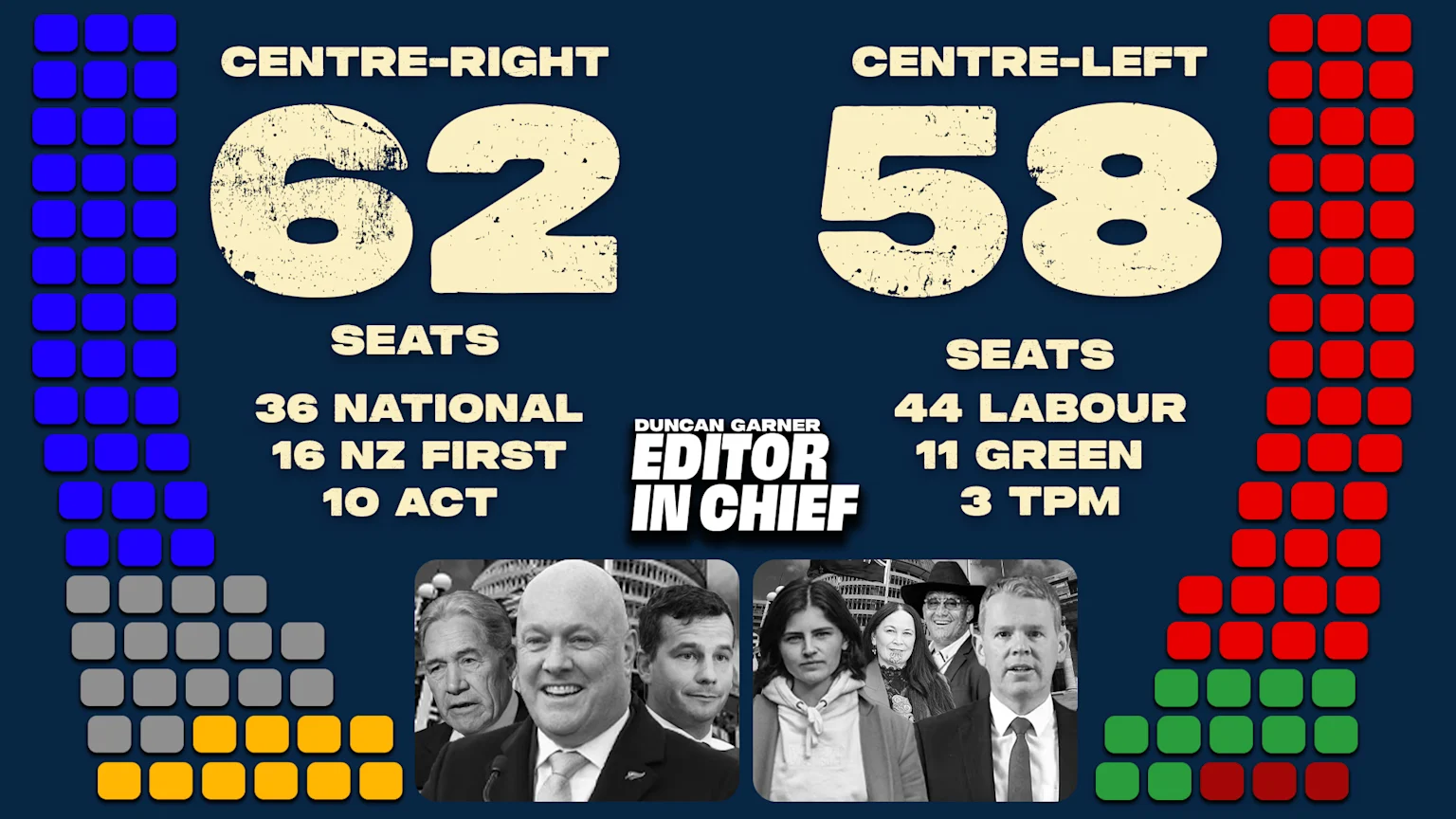
As it stands, National, ACT and New Zealand First can govern on 62 seats. Labour, the Greens and Te Pāti Māori get to 58. That is close. Too close for comfort. A poll a few weeks ago had the two blocs locked at 60 seats each. That is not political stability. That is a country tossing a coin and hoping the thing does not land on its edge.
Watch Duncan’s take on the TPU/Curia poll here:
The chance of a hung parliament is still low, probably less than 10 percent, but that is not nothing. In New Zealand politics, 10 percent is a warning light. A few thousand votes shifting, one minor party underperforming, one electorate seat flipping, and suddenly no one can form a government. Then what? Back to the polls? More uncertainty? More drift?
The numbers are now brutally tight.
This matters because the next government will not be dealing with small issues. The economy is weak. Households are stretched. Public services are under pressure. The country is tired, grumpy and looking for direction. What we do next could shape New Zealand for decades. That is not dramatic. That is real.
National appears to have stopped its free fall. It flirted with the 20s, got a fright, and now seems to have settled around 30. Not exactly a triumph, but enough to keep Christopher Luxon alive. National has been battered over spending cuts, the economy and its own clumsiness, but its core vote has held. That tells you something. Centre-right voters may be annoyed, but they are not yet walking away.
The real pressure is on Labour.
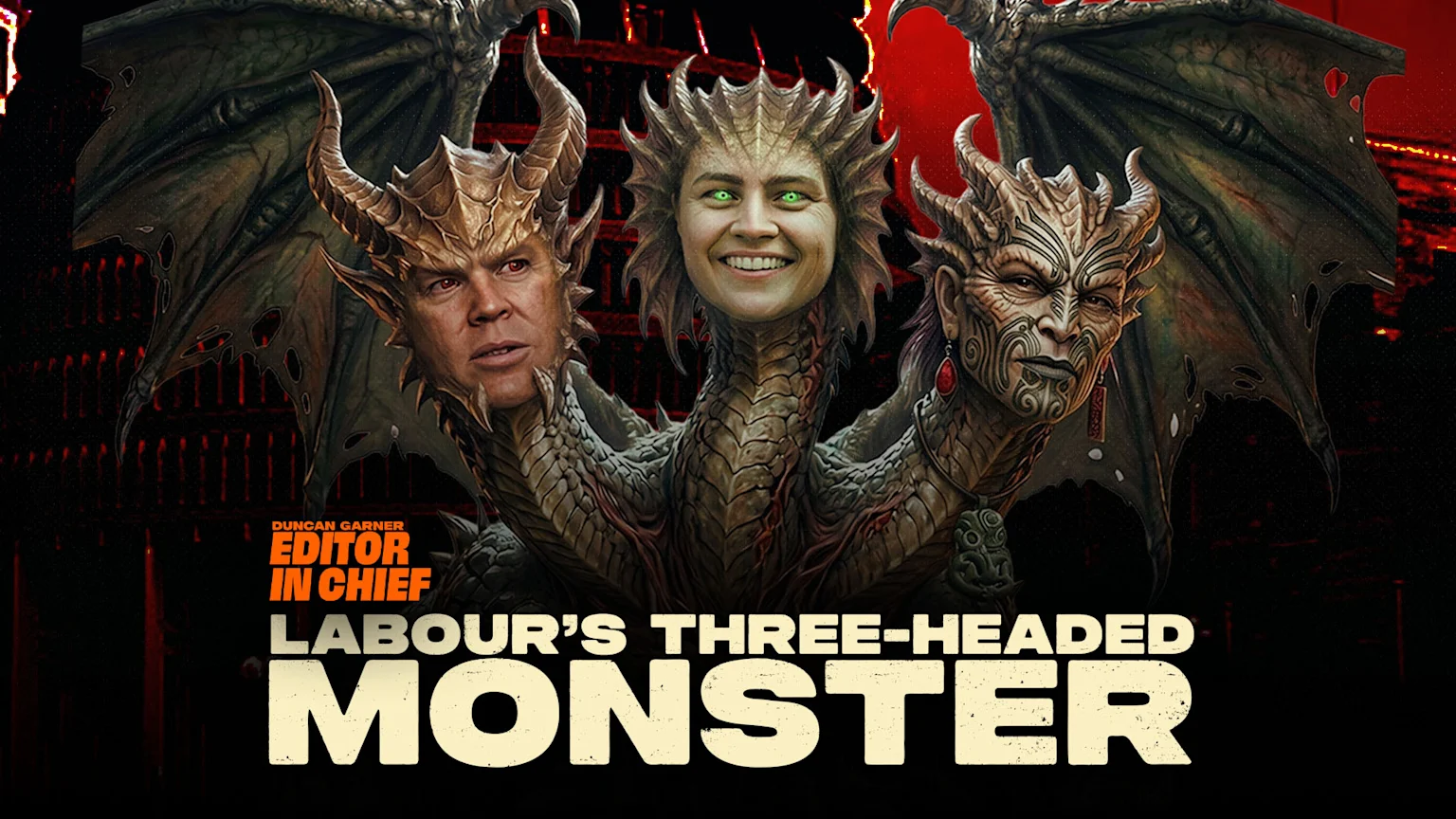
Chris Hipkins has a problem he cannot spin his way out of. Labour almost certainly cannot govern with just the Greens. The numbers do not work. That means if Labour wants power, it will almost certainly need Te Pāti Māori as well. There it is. The three-headed monster. Labour, Greens, Te Pāti Māori. Hipkins can distance himself all he likes, but the maths keeps dragging him back.
And for centrist voters, that matters enormously.
A Labour government dependent on Te Pāti Māori would be fragile from day one. If one or two seats decide whether the government survives, Te Pāti Māori’s negotiating power becomes enormous. That is how MMP works. Small parties get big leverage when the numbers are tight. They do not have to win the country. They only have to hold the balance.
That is where National must be clinical. Its job is not to shout. It is to remind voters, every day, who Hipkins would have to climb into bed with.
Because when you add the Greens and Te Pāti Māori together, a lot of middle New Zealand will see a programme that looks totally out of step with their lives. Wealth taxes. More co-governance. Softer justice. Defunding police rhetoric. Letting more people out of prison. These things might excite activists, academics and Wellington operators, but they do not speak to the hopes and worries of most Kiwis trying to pay the mortgage, raise kids and stay safe.
Hipkins knows this. That is why he is trying to look moderate. He knows the Greens and Te Pāti Māori scare the voters he needs most. The trouble is, Labour’s recovery may be partly driven by people trying to make Labour stronger so it is less dependent on them. That is a strange sort of support. Vote Labour, so Labour does not have to listen too much to its partners. Good luck selling that.
The centre-right has its own problems. ACT can be hard work. New Zealand First is never predictable. But the National-led arrangement looks more coherent than the alternative. It is still a difficult coalition, but it does not look like three parties pulling the country in completely different directions.
That is the choice now. Not perfection. Not inspiration. Not some fantasy of clean, single-party government. Those days are gone.
This election is about who gets dragged around by whom.
And right now, Labour’s biggest problem is not National. It is the company Labour will have to keep.
Listen or Watch the full episode:
Published by Duncan Garner
13 May 2026