Opinion
Duncan Garner - Labour’s $18b problem just got real

Published by Duncan Garner
15 Jun 2026
Labour has a credibility problem.
Not a messaging problem. Not a timing problem. Not a media problem.
A credibility problem.
And when it comes to the economy, that is fatal territory for any party asking New Zealanders to hand it the keys to Treasury.
The issue is simple. Labour wants to make big promises, but it does not want to properly explain what they cost, how they are paid for, and what happens if the numbers do not stack up.
Watch the full video below
Politics hates a vacuum, and Labour has created a massive one.
A vacuum on costings. A vacuum on priorities. A vacuum on how it would actually pay for the things it wants voters to buy into.
So Nicola Willis has stepped straight into that gap.
She turned up on a Sunday, which tells you National is now getting election fit, and she went straight at Labour’s weakest point. She said the purpose of her media session was “to call upon the Labour Party to explain how it is going to close the yawning gap between its spending plans and revenue intentions.”
That is the whole argument right there.
Labour has left the gap. National has filled it.
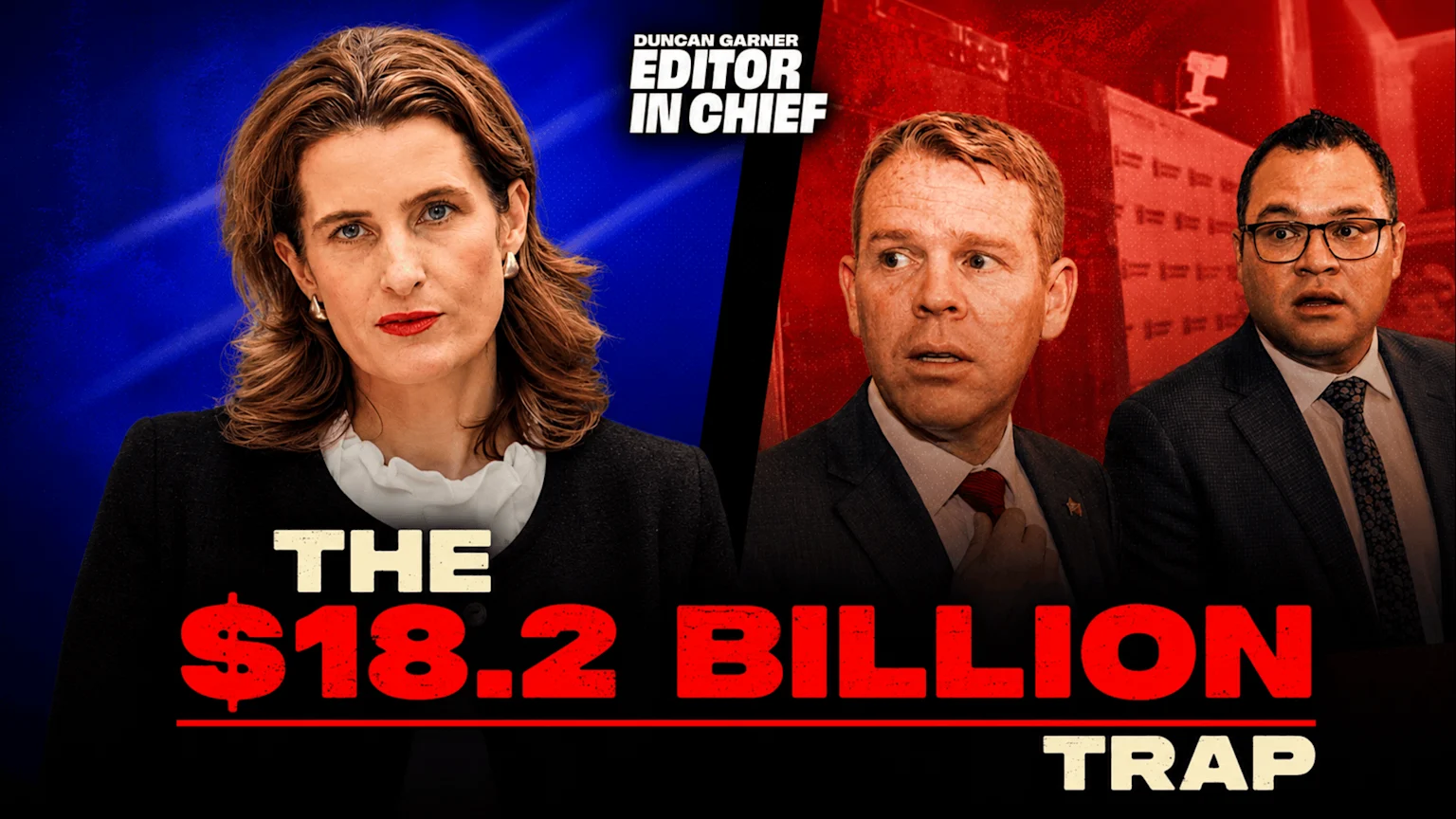
Willis says, even under conservative assumptions, “there is an $18.2 billion gap between Labour’s spending plans and its capital gains tax.”
Then she put the political sticker on it.
“This is Labour’s $18 billion hidden bill for New Zealanders.”
That is a brutal line, but Labour has given National the opening to use it.
Chris Hipkins could have avoided this. He could have fronted with a clear plan. He could have said, here are the promises, here is what they cost, here is how we pay for them, and here is what we will not do.
Instead, Labour has allowed National to come in and seize control of the debate.
And whether every single number from National survives scrutiny is almost beside the point. The real story is that Labour has let its opponent define the problem.
That is political negligence.
Willis sharpened it further, saying Labour’s recent announcements show “the persistence of their cavalier approach to the public purse.”
That is the line National wants to land. Labour cannot count. Labour cannot cost. Labour cannot be trusted with the books.
And then Labour walked straight into it with its public transport fare cap.
Labour says the policy will cost $65 million in the first year. It also says people could save an average of $25 a week, and that hundreds of thousands of New Zealanders will benefit.
Well, three things cannot all be true at once.
If hundreds of thousands of people are saving $25 a week, then the cost is not $65 million a year. If the total cost is $65 million, then the number of weekly beneficiaries looks a lot closer to 50,000 people, not hundreds of thousands.
That is not political spin. That is basic maths.
Willis put it plainly. Labour claimed the policy would save people an average of $1,200 a year for a total cost of $65 million.
“That simply cannot be true,” she said.
And then Jack Tame tested the same numbers in front of Labour’s transport spokesperson Tangi Utikere.
It was painful viewing.
Tame asked the obvious question. If 200,000 people save $25 a week, that is $260 million a year, not $65 million.
That is the sort of question voters will ask too. How much does it cost? Who gets the money? How many people benefit? Where does the funding come from?
These are not trick questions.
They are the minimum entry-level requirements for anyone wanting to run the country.
But Labour did not have the answer. Utikere repeated the lines. He talked about cost of living pressure. He talked about caps in Auckland, Wellington, Palmerston North and Christchurch. He talked about people benefiting when they use public transport.
But he never clearly reconciled the numbers.
And voters see that.
They see the hesitation. They see the ducking and weaving. They see a party trying to sell a big cost of living policy without being able to explain the price tag.
That is the problem.
You do not get to ask New Zealanders to hand you the keys to Treasury while refusing to show them the spreadsheet.
Chris Hipkins has spent months attacking the Government over spending decisions and demanding accountability. Fair enough. That is his job.
But accountability is not a one-way street.
The same standard applies to Labour.
What are the promises? How much do they cost? How do you pay for them? If the books do not balance, what gets cut? If new taxes are coming, what are they?
Right now, Labour looks flat-footed. It looks defensive. It looks like it is still doing its homework.
National, on the other hand, looks organised. It looks hungry. It looks like it has worked out where Labour is soft, and it is now going hard at that weakness.
Willis summed up the attack when she said Labour’s plans would “torpedo the surplus, add billions to debt, and inevitably resort to new taxes on hardworking Kiwis.”
That is exactly the frame National wants for the election.
A government defending its record against an opposition refusing to explain its future.
That is not where Labour wanted to be.
But after another week of shaky policy launches, missing costings and uncomfortable interviews, that is exactly where it finds itself.
Labour can complain that National is playing politics. Of course it is. That is what political parties do.
But the answer to a political attack is not outrage. It is evidence.
Numbers. Costings. Priorities. A plan.
At the moment, Labour does not have enough of that on the table.
And unless Labour starts answering the questions, National will keep answering them for them.
That is dangerous territory for Chris Hipkins.
Because if Labour cannot count, cannot cost, and cannot explain how it pays for its promises, then why should voters trust it with the country’s books again?
Published by Duncan Garner
15 Jun 2026