Opinion
`Duncan Garner - Coward Punch Reform Is Gutless Political Tokenism
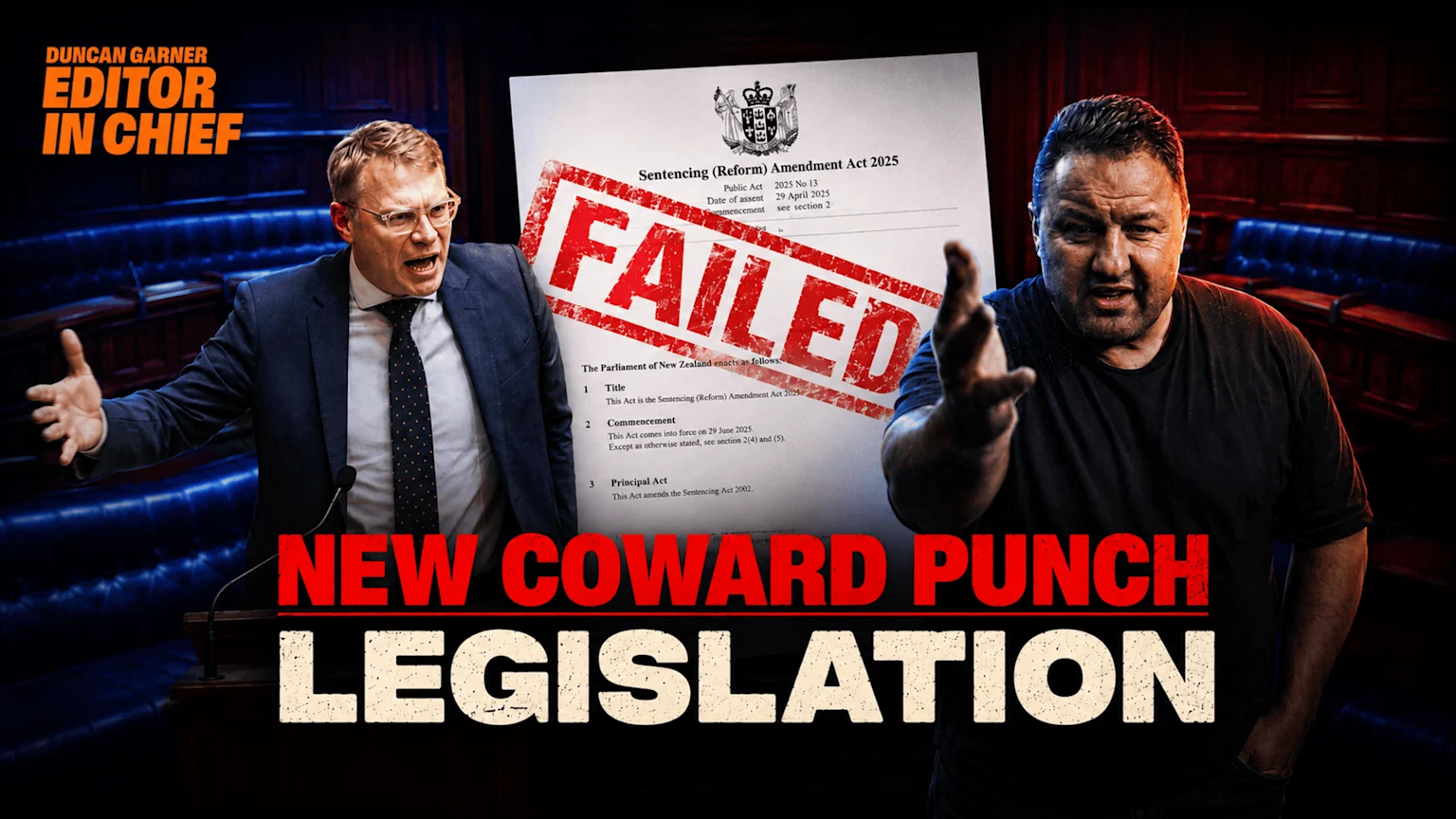

Published by Duncan Garner
09 Jun 2026
This coward punch law is not a crackdown. It is political packaging.
The Justice Select Committee has recommended creating a specific offence, but it has refused to back that offence with a mandatory minimum sentence or a mandatory non-parole period. Judges will retain much the same discretion, the same sentencing precedents will remain and offenders may continue walking free far sooner than the public expects.
That defeats the entire purpose.
Watch the episode below
We are not talking about someone being shoved over and skinning a knee. We are talking about deliberate violence that kills. Walk Without Fear campaigner Mike Angove put it plainly: “We’re talking about someone getting killed by a deliberate act of violence.”
Yet about 25 percent of these offenders receive home detention. Angove says the average prison sentence for those who do go inside is roughly three years, with parole eligibility potentially arriving after a third of the sentence.
That is not a serious consequence for ending someone’s life.
National has tried to make the changes sound substantial. The maximum sentence will be life imprisonment. Except, as Angove points out, life was already available for manslaughter. Other maximum penalties rise by a year, but discounts and early parole eligibility can reduce the practical difference to just a few months.
“It’s tokenism,” Angove says. He is right.
A tougher maximum means nothing when courts keep sentencing near the bottom. A new offence means little if the person convicted can be home within months. Parliament can change the wording all it likes, but unless it changes the time actually served, this is legal window dressing.
National has had years to get this right. Wayne King’s original bill emerged in 2018. There have been repeated promises, multiple attempts and plenty of tough language from politicians who claimed violent offenders would face tougher consequences.
Now, at the finish line, they have baulked.
“It’s a lot easier to make decisions in opposition than it is when you’re actually at the coalface,” Angove says. That line should embarrass every National MP on the committee.
ACT and New Zealand First are still pushing for stronger sentences. National appears to have retreated into the same cautious legal establishment thinking it once criticised. The Ministry of Justice protects the status quo, lawyers warn against limiting judicial discretion and politicians lose their nerve.
Meanwhile, victims’ families carry the real sentence.
Angove highlighted the case of a killer sentenced to just over four years after discounts, despite being a repeat violent offender. He became eligible for parole roughly 16 months after going to prison.
“That is the definition of insanity,” Angove says.
It is also the system this select committee has chosen not to fix.
Justice Minister Paul Goldsmith can still reject this weak recommendation. Cabinet can impose a meaningful minimum non-parole period and ensure anyone who kills with a coward punch serves a sentence that reflects the life taken.
National says it is tough on crime. This is where slogans meet reality.
Right now, the slogan is winning and justice is losing.
Check the full podcast below
Published by Duncan Garner
09 Jun 2026