New Zealand
Boom in bat activity brings hopes of bolstered breeding

Published by Ben Goldson
14 Aug 2026
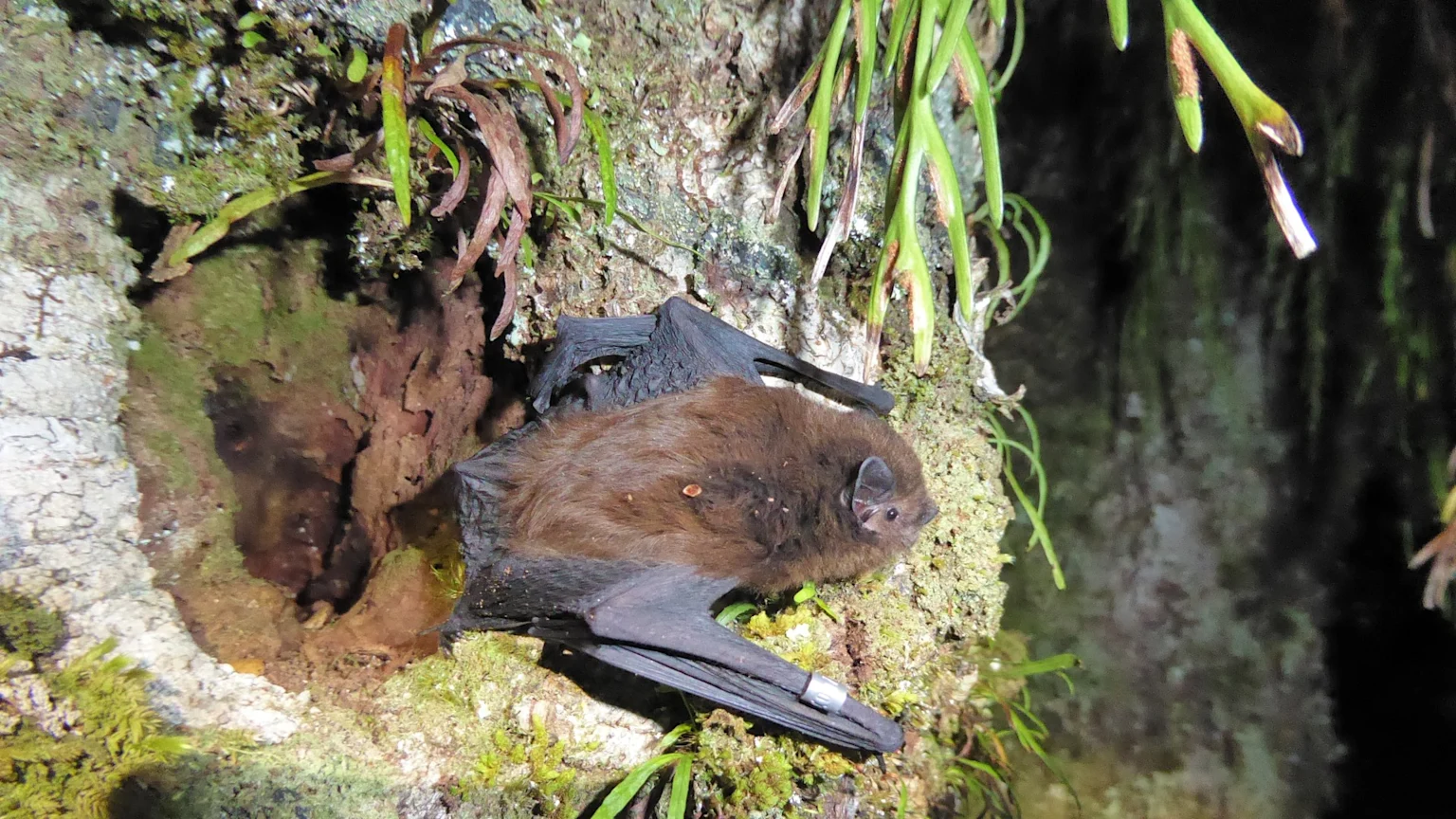
Having seen their population collapse in the early 20th century due to a range of human activity, there are signs that the numbers of long-tailed bats, or pekapeka, may be recovering in a section of the Kahurangi National Park. Rated as Nationally Critical, the most severe conservation status tier, the small animals are also hard to spot, as they mostly fly at dusk, with a top speed of 60kph.
Speaking to Rova, the Department of Conservation’s Moira Pryde says there are challenges in restoring their population.
"The bats can cover a wide area. They can travel 25km in a night so it's not a small area that we're talking about. They roost in holes and cavities, so they're vulnerable to all the classic predators like rats, cats, possums and stoats."
"They’re also pretty difficult to spot in that they’re small, they come out at dusk, so when people see them, they might mistake them for birds or moths. People may have seen them, but then they don't realize that they’re actually bats. "
DOC set up several digital recording stations back in 2018 to catch the telltale sound of a bat in flight. Having seen an average of 1.79 passes in the first year, these have gone up to 6.75 so far in 2026, with one site seeing 500 over just three nights. Although this doesn’t necessarily mean an increase in the bat population, Pryde says it is very promising.
"There's not a known relationship, so one bat can make a lot of bat passes when it echolocates, but it is a significant increase in activity that we've noted. We can't say that it's a definite population increase, but you'd imagine that more activity does relate to the number of bats around."
"We've started getting a lot of activity further down into the Heaphy River, whereas when we started, there was hardly any activity there. "
Published by Ben Goldson
14 Aug 2026