New Zealand
'Be alert, not alarmed': Auckland fault line found to be active

Published by Rebekah Hunt
27 May 2026
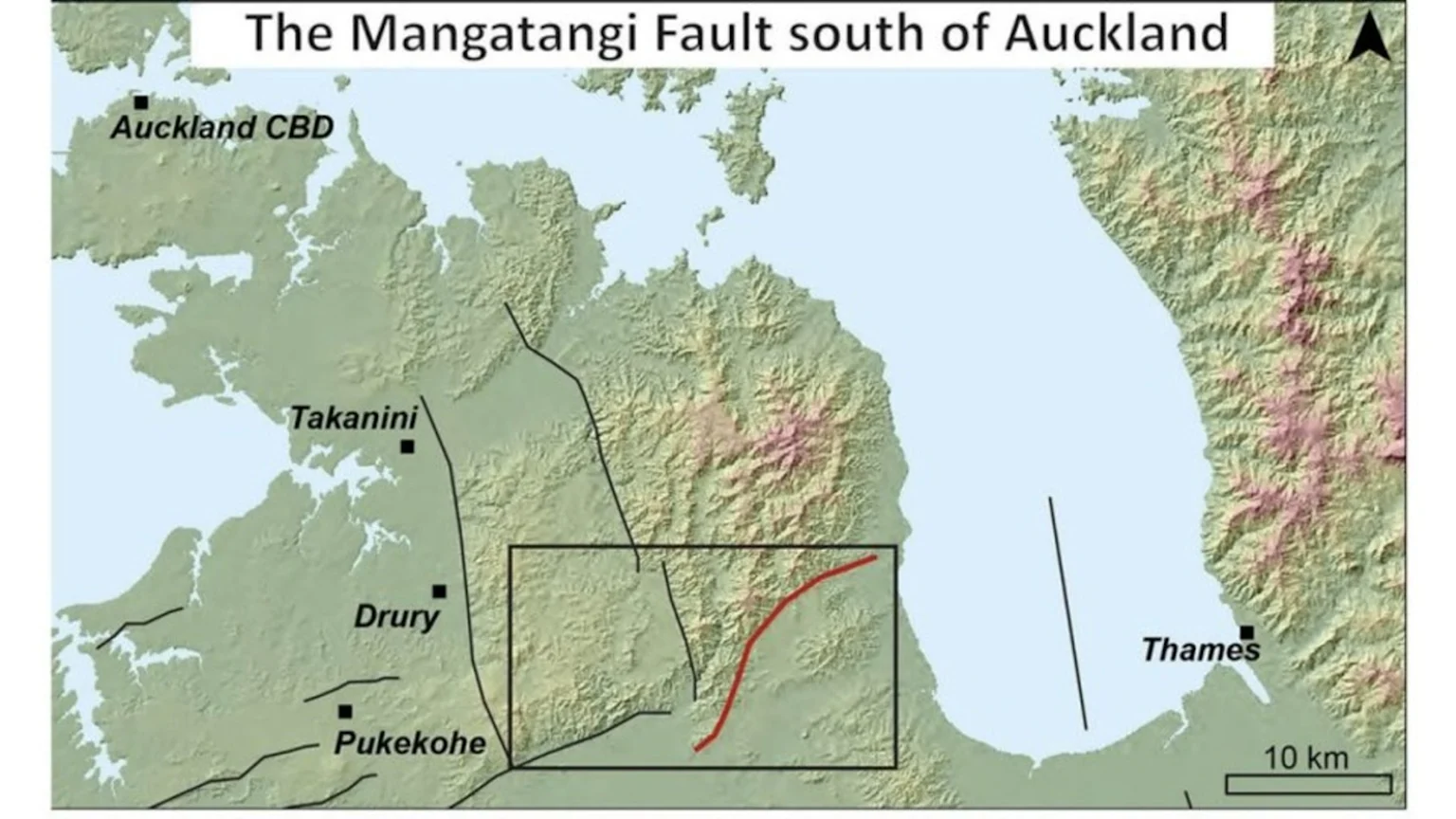
Auckland University researchers have declared the Mangatangi faultline, which runs along the Hunua Ranges, as active and capable of producing a quake.
It qualifies because it has ruptured in the last 10,000 years. For context, anything within 125,000 is an automatic yes.
Co-author Dr James Murihead told rova it shouldn’t be a cause for concern.
“I think we should be alert to this, but not alarmed. It just provides us with a good reminder that we need to make sure we understand the earthquake history in Auckland, so we can make really good and informed decisions about how we build and plan our city.”
“6.8 is the maximum magnitude that the Mangatangi Fault could produce, if the entire faultline were to rupture in a single earthquake,” he added.
The research, published in the New Zealand Journal of Geology and Geophysics, marks the first time a faultline in Auckland or the Hunua Ranges has been radiocarbon dated.
Murihead said it highlights how little is known about Auckland's seismic activity.
“We do know that there are faultlines in and around our city, and many of them have been identified and mapped. The next question for us is just how often they have earthquakes, and then how large are these earthquakes?” he mused.
In a joint media release, the team of four pointed out that raising Auckland’s hazard classification from low to medium would impose tougher requirements under the Building Code.
“Auckland’s continued expansion to the southwest is putting more people and critical infrastructure in closer proximity to the Mangatangi Fault, which lies 50 kilometres south.”
“This fault may not rupture again for tens of thousands of years,” added Hannah Martin, Lead Author and former Master's student at the University of Auckland.
“However, this is an active fault with the potential to generate a large earthquake in a region that doesn’t expect one.”
To fill the gaps, Murihead has teamed up with two other study participants to find additional evidence of past earthquakes. They will use advanced mapping, ground-penetrating radar, and trenching to dig up the facts.
Martin has gone on to study at the Nevada Seismological Laboratory at the University of Nevada, Reno.
Published by Rebekah Hunt
27 May 2026