Sport
All Blacks can beat Boks: Sir Steve Hansen dismantles the myth
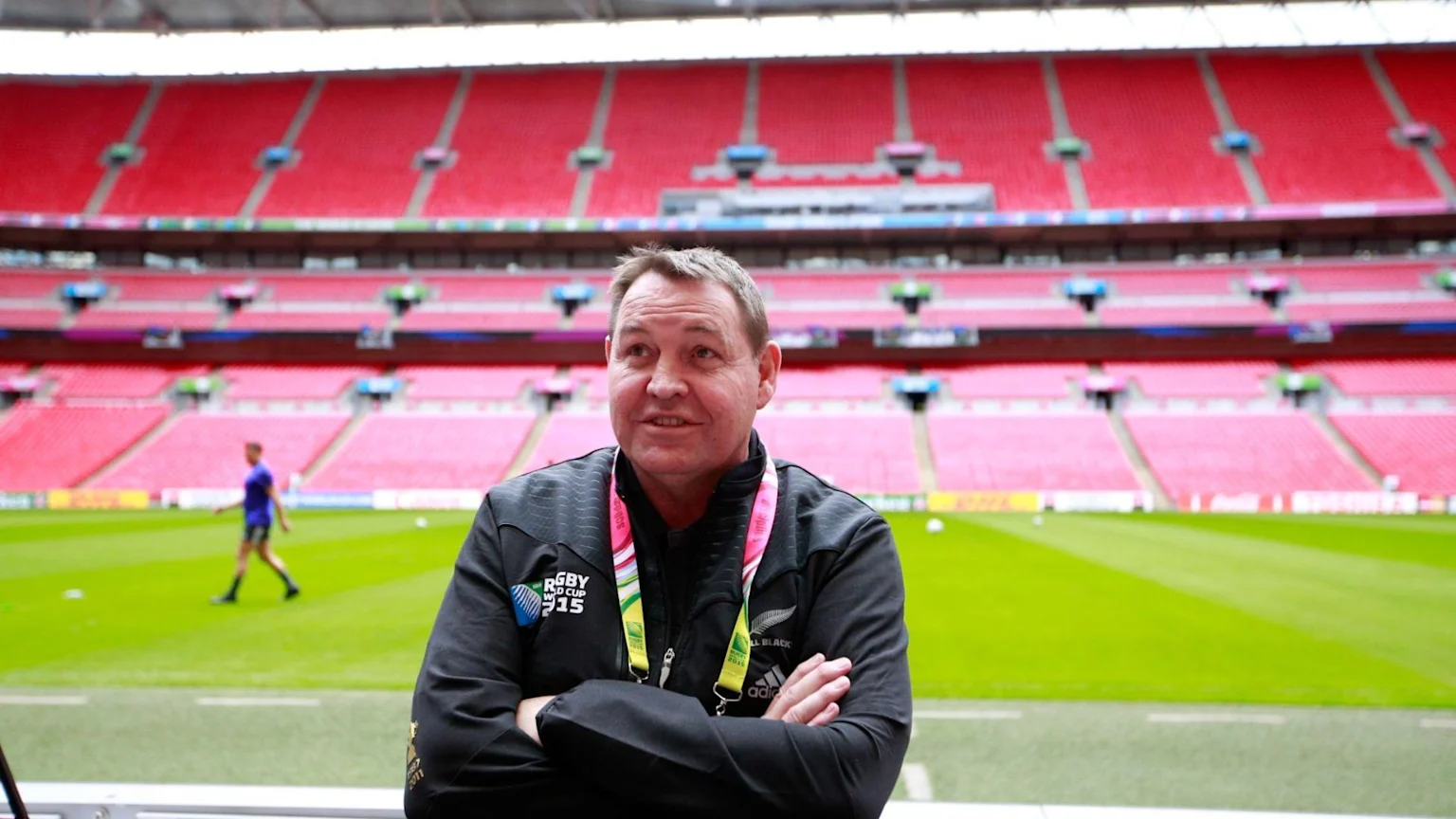
Published by Martin Devlin
30 Apr 2026
The most successful All Blacks coach in history has watched South Africa’s coronation as untouchables unfold over the past year, and he’s calling time on it.
Speaking from Japan, where he coaches Toyota Verblitz, Steve Hansen delivered the sort of blunt reality check only he can: The Springboks are beatable, New Zealand has the talent, and it is time we stopped talking ourselves out of victory before a ball is kicked.
“Everyone’s painting this picture that they can’t be beaten,” Hansen tells the 'DSPN' podcast with a tone measured but firm. “That was a day that they could have been beaten. Should have been beaten.”
He is talking about the World Cup final. One point, 14 men, decisions that did not fall New Zealand’s way.
The context matters because Hansen is not rewriting history or making excuses. He is pointing out that the margin between number one and second is paper thin, and South Africa’s dominance is as much narrative as reality.
The talent is here already here in NZ
Hansen’s optimism is not built on hope or nostalgia. It is grounded in what he is watching unfold in Super Rugby.
“I’m more than confident. I know we have the talent,” he says without hesitation. “Great players play to their own standards, and we are fortunate. We’ve got a lot of very, very talented players in New Zealand who want to be great.”
This is not a coach puffing up his home nation from abroad.
Hansen is specific about what makes New Zealand dangerous: forwards who can dominate the set piece and play rugby.
“We’ve got big props that can scrum, but they can also play rugby,” he notes. “When New Zealand teams have forwards that can do the hard yards and do the primary roles like scrum and breakdowns and line-out stuff, the set-piece work, but they can also play rugby, we’ve always traditionally been a strong rugby team.”
That combination, Hansen argues, is what separated the great All Blacks sides of the 1960s and his own era from the rest.
And he sees it emerging again now, not in some distant rebuild, but in the current crop.
South Africa are not invincible
The Springboks are brilliant, Hansen concedes. They are number one for a reason.
But the idea they have opened up an unbridgeable gap is nonsense.
“Have they won every game they’ve played?” he asks.
The answer is no.
“So they’re beatable. There’s your answer to your question.”
Hansen’s frustration is palpable when he describes how the narrative around South Africa has spiralled.
Yes, they hammered New Zealand in Wellington last year. But Hansen is not reading tea leaves from that scoreline.
“The All Blacks had a really average last 30, 40 minutes in that test,” he says. “Does that mean that’s how the margin’s gonna be all the time? No, it doesn’t. Sport’s not like that.”
He recalls the 57-0 thrashing New Zealand handed South Africa at North Harbour. The Boks won the next World Cup.
One result does not define a trajectory, and one bad day does not cement inferiority.
“What I saw wasn’t very exciting because it looked like we didn’t have any idea how to play,” Hansen says of the All Blacks in the second half of last year.
But that dysfunction, he argues, is exactly why there is room for optimism.
If a fractured team can push the world champions that close, what happens when they are united?
The tour changes everything
New Zealand’s upcoming tour to South Africa looms as the perfect testing ground.
Hansen calls it “great preparation for a World Cup”. Eight games against South African sides, all in hostile territory, all designed to expose weaknesses and forge resilience.
“You just gotta make sure that you get all your ingredients right when you’re baking the cake,” Hansen says.
The tour offers Dave Rennie’s coaching group the chance to refine their systems in the sort of pressure cooker environment that reveals whether a team has genuine belief or just potential.
Hansen is bullish about Rennie and his staff.
“He’s a smart man. He’s had a lot of success in the teams he has coached,” he says. “Once you get your players excited and wanting to be there, all of a sudden anything can happen. Because the talent, I believe, is there.”
The return of mental skills coach Gilbert Enoka is a major tick for Hansen.
“The players just love him. They trust him,” he says. “He generates an inner self-confidence that you can cope with anything. That’s the number one best change.”
Hansen’s point is clear: South Africa have set the standard, but they have not locked the door.
New Zealand does not need to copy them wholesale. They need to get their own house in order, back their talent, and remember that expectations are not arrogance. They are fuel.
“If you expect to be at the bottom, that’s where you’ll go,” Hansen says. “If you expect to be at the top, then you’ll work to be at the top.”
Can the All Blacks topple the Boks in 2026?
Hansen has already answered that.
The real question is whether New Zealand will believe it themselves.
Published by Martin Devlin
30 Apr 2026